Group 14
BUILT TO BELONG

Built to Belong is a live refurbishment proposal for Brookfield Unitarian Church, a Victorian Grade II* listed place of worship in Gorton, Manchester. Commissioned by industrialist Richard Peacock, the church holds strong historical and regional significance and is currently listed on the Heritage at Risk Register. The project focuses on the sensitive refurbishment of the kitchen and toilet facilities to support wider community use while respecting listed-building constraints. The proposals aim to enable inclusive access, improve functionality, and support grant applications, ensuring the long-term sustainability of the church as both a place of worship and a community resource.

Chengshuai Y / Esta M / Haoyan D / Javiera Del Carmen SH / Jiage G / Mariz Mamdouh Raafat L / Maryam A / Niamh H / Rayyan K / Tin Yuet W / Yige Z

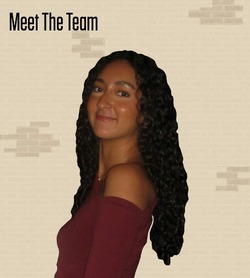
Hi everyone!
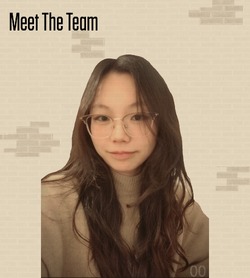
I’m Javi, a 5th year student in &Architecture Atelier. I love early concept design work, and I have an interest in user-centred design— understanding how people experience and move through spaces is something that really drives my approach to architecture. As I completed my undergraduate here at MSA too, I have participated in MSA Live previously, and I am very excited to be back and be working on a heritage project. I’m especially keen to work collaboratively, learn from everyone’s perspectives, and contribute to a project that feels both sensitive and forward-thinking. I can’t wait to get started and see what we create together!

Posted 19 Feb 2026 00:48
Hi, my name is Rayyan, and I am a MArch 1 student, currently part of the Continuity atelier. I completed my undergraduate degree in architecture in India, where I gained experience working in practice across a range of projects, from small-scale residential work to urban-scale master planning. Alongside this, I also worked on independent professional projects, which helped me build confidence in both design thinking and technical delivery.

Through both university study and professional practice, I have developed a strong interest in adaptive reuse and context-led design. I am particularly interested in how architecture can respect heritage and craft while creating meaningful, people-centred spaces for the future.

I am excited to engage with the Unitarian church on this live project. Learning about their values of openness and community has been incredibly valuable, and I look forward to contributing thoughtfully to a design that supports their long-term vision.
Posted 19 Feb 2026 01:00
Hi, my name is Niamh and I’m an MArch 1 student at the Manchester School of Architecture, where I also completed my undergraduate degree. I completed my Part 1 placement at John McCall Architects in Liverpool and continue to work there alongside my master’s studies.

Through both practice and university projects, I’ve developed a strong interest in user-centred design and sustainability, with a focus on creating practical, well-considered spaces.

I’m looking forward to working on a live project and collaborating with the client and local community to deliver a thoughtful and effective proposal.
Posted 19 Feb 2026 08:35
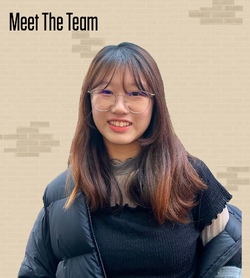
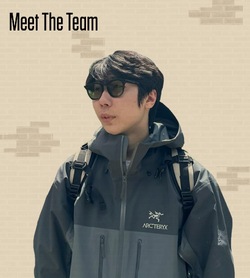
Hi! I’m Tin Yuet, but you can also call me Joyce! I completed my undergraduate studies in Hong Kong and am now a MArch candidate at MSA. I'm over in the Non-standard Habitat atelier this year. My design methodology centers on connectivity, linking people, history, and space. In this project, I aim to translate the storied past of Brookfield Unitarian Church into a functional, inclusive environment for Gorton’s modern community.
Posted 19 Feb 2026 09:07
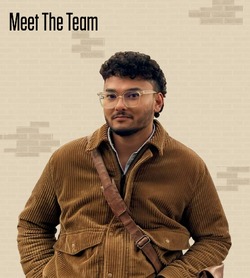
Hi there, I’m Yige Zhao

Skills: Adobe Creative Suite (InDesign, Photoshop), AutoCAD, SketchUp

Course/Studio:Praxis, March

I am pursuing a Master's degree in Architecture at MSA. I have a strong interest in material systems, reuse strategies, and research-oriented architectural practice.
My works explore the relationship between the construction process and spatial design, often providing information for architectural schemes through system diagrams and research-based approaches. I particularly focus on how to transform waste materials into architectural and spatial strategies.
Posted 19 Feb 2026 12:33
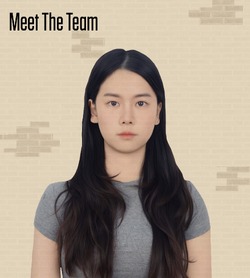
Hii I’m Mariz,

I'm a first-year Architecture student and am especially interested in architecture that creates safe, inclusive spaces and supports people. I enjoy exploring how interior spaces can shape comfort and experience. Throughout this year, I have developed my skills in InDesign, Photoshop, and Procreate. I’m actively exploring my strengths and areas for growth and will use this opportunity to experiment, learn, and expand my knowledge.
Posted 19 Feb 2026 19:43
Hello, I am Jiage Gong from MAAR. My major is Adaptive and Reuse, and I enjoy exploring the connections between the old and the new in architecture, seeking to preserve historic buildings while breathing new life into them.
Skills: Photoshop, InDesign, SketchUp, Illustrator, Maya,, AutoCAD
Hobbies: Enjoy listening to music and reading novels
Posted 19 Feb 2026 23:18
Hello, my name is Chengshuai Yuan , and I am currently studying Architecture and Adaptive Reuse. My undergraduate degree is from China. Over the past five years, I have not only learned about architecture, landscape architecture, and urban planning, but I have also personally participated in several residential projects. In addition, I enjoy traveling and exploring new and different things.
In terms of professional skills, I am proficient in SketchUp and Rhino, and Photoshop is also something I greatly enjoy.
Posted 20 Feb 2026 13:40
Hi I’m Esta !

Hobbies: working out and flower arranging

Skills: adobe suite , revit , annologue skills.

I’m currently in BA1 and I have interest in sustainability, commercial development and community engagement!
Posted 21 Feb 2026 11:28
Session 1: First Impressions & Fresh Energy

Today was all about new beginnings. We met for the first time, sharing our backgrounds and experiences in architecture, and quickly discovered how our different perspectives could shape something exciting.

We jumped straight into the project—brainstorming poster ideas and outlining deliverables before meeting our client for the first time. The session was inspiring and productive; we discussed his vision, shared our interpretation of the brief, and aligned on next steps.

A strong start, fresh ideas, and lots of momentum—exciting things ahead!
Posted 25 Feb 2026 10:06
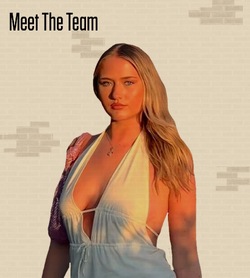
My name is Haoyan Duan , and I am a Chinese first-year BA Architecture student at the Manchester School of Architecture. I have a strong interest in site- and landscape-led design, and in the relationship between architecture, historical context and user experience. I aim to further develop my spatial thinking and technical skills throughout my studies, and to pursue an environmentally and socially responsible design approach. I am proficient in Photoshop and SketchUp, using them for visual communication, architectural collage and three-dimensional modelling to support design development.
Posted 3 Mar 2026 14:34
Session 2: Brainstorms, Bold Ideas & Mild Chaos

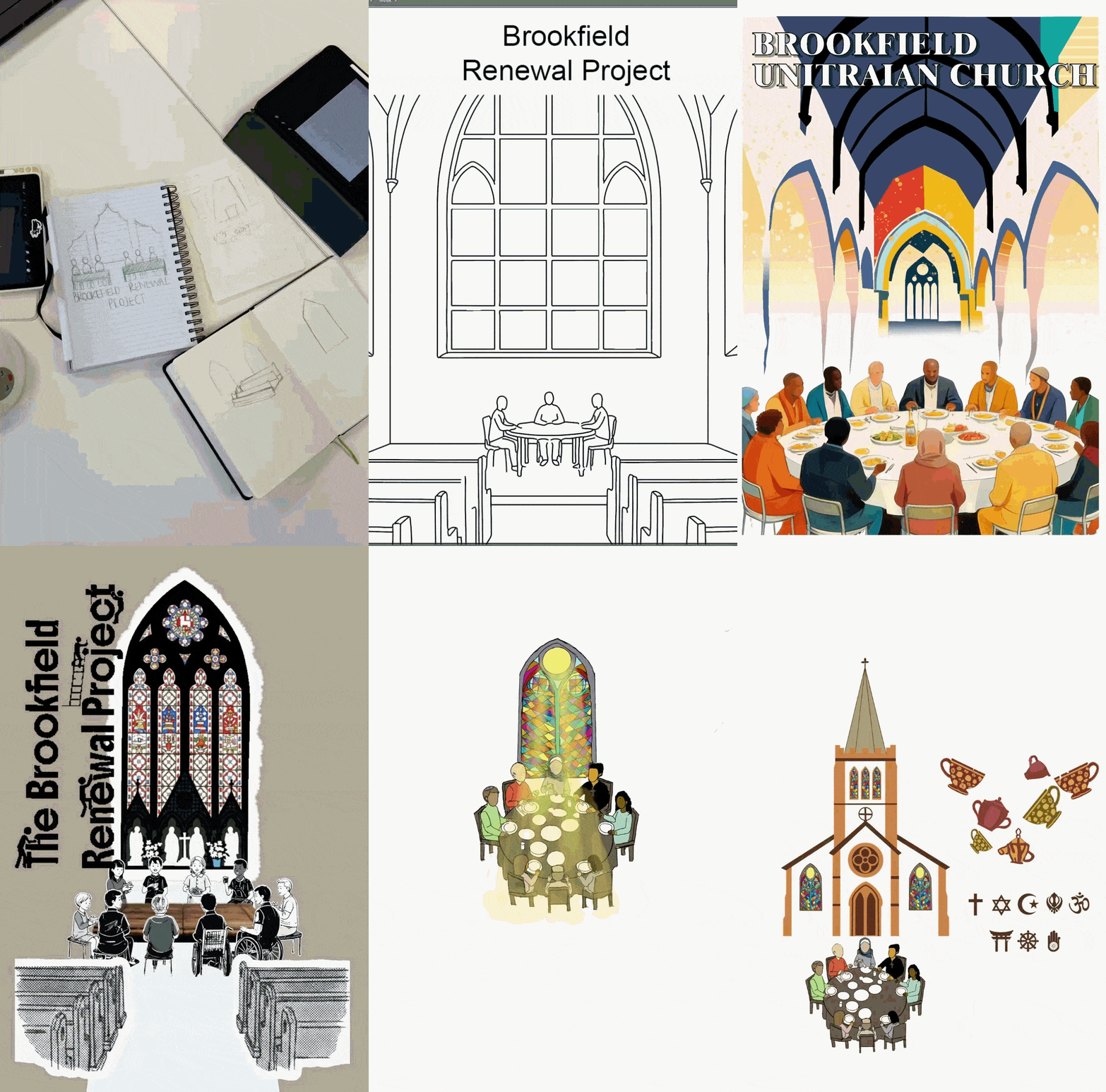
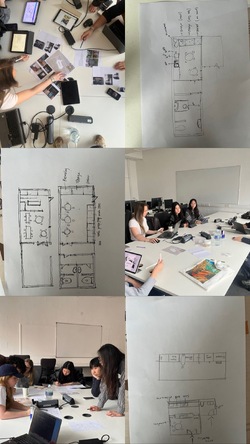
Today was where the creativity began. Armed with our own ideas, we dove into brainstorming concepts for the group’s poster and name. Some of us flying solo like lone geniuses, others teaming up to bounce ideas around like a high-stakes game of creative ping-pong.

The room quickly filled with everything from “this could actually work” to “wait… what is that? Somehow, through the chaos, patterns started to emerge. Debates were had, sketches were scribbled, and a few questionable names were (thankfully) left behind.

By the end, we managed to land on a concept that everyone could get behind. It’s still a work in progress, but it’s got potential, personality, and just the right amount of chaos baked in.

Next stop: refining, developing, and turning this spark into something submission-ready. Stay tuned.
Posted 17 Mar 2026 14:59
Session 3: The “Just One More Tweak” Era

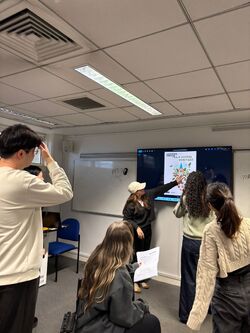
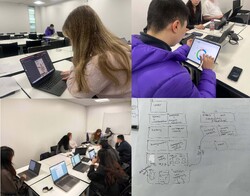
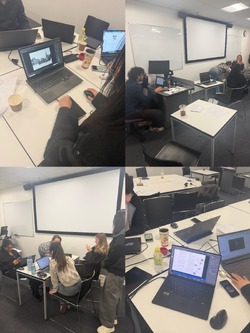
This session was all about refining and pulling everything together. Gathered around the screen, we reviewed our latest draft. We worked together to make tweaks, suggestions, and the occasional “wait, move that slightly to the left.”

It felt like everything was finally clicking into place. The ideas we’d been developing started to look like something real, something cohesive and something we were all genuinely proud of.

After much back-and-forth (and a surprising amount of agreement), we locked in our group name: Built to Belong. It just felt right, capturing both our concept and the spirit of our collaboration.

With final touches underway and submission in three days, stress will finish the work!
Posted 17 Mar 2026 15:04
Session 4: Spreadsheets, Strategy & Serious Business (…Kind Of)

This session was where things got real. The creative chaos took a backseat as we split into mini teams, each tackling a different task: risk assessment, ethics application, budget, and project timeline.

It was less brainstorming and more "who knows how to use excel?". Each group dove into their task, piecing together the behind-the-scenes structure that makes Built to Belong more than just a great idea.

There were moments of intense focus, a few “wait, does this actually make sense?”

By the end, we had a solid foundation in place. Everything mapped out, justified, and ready to support our final submission.
Posted 17 Mar 2026 15:10
Session 5: The Carpet Session (Accountability Hour)

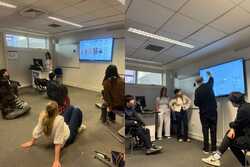
This session, now officially known as the "Carpet Session", was all about reflection, review, and collaboration

We revisited our blog posts, filled in the gaps, and made sure we had shared accountability.

The highlight (and slight reality check) was our review with the tutor. It was a genuinely productive session where we realised that while splitting into mini teams felt efficient, it also left a few gaps in our submissions. We now acknowledge we should all stay in the loop, or we all suffer the consequences. Enhancing our communication is now our main priority.

On the bright side, we’re leaving more organised and aligned. We set future dates to meet with our collaborator and started discussing initial design ideas, this time with everyone on the same page (literally and metaphorically).

A bit humbling, very useful, and definitely necessary. The Carpet Session has spoken.
Posted 17 Mar 2026 17:13
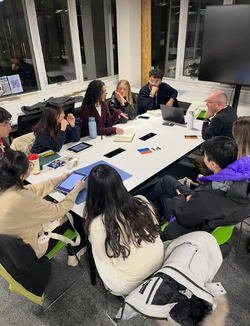
Session 6: Collaborator Meeting and Workshop Planning

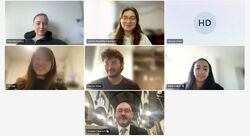
This week’s session focused on our meeting with the collaborator and on clarifying how the upcoming workshop should be structured. It was a useful discussion that helped us move from vague ideas towards something more organised and realistic.

A key part of the conversation was about participation. While the ideal number would be around fifteen people, we discussed that the main requirement from the university’s point of view is to have at least eight participants over the age of eighteen. This brought ethics and safeguarding into the discussion, especially around how information will be collected, explained, and stored safely. It was a reminder that community engagement is not only about generating ideas, but also about making sure the process is responsible and well managed.

We also talked through how we want to present our ideas during the workshop. Rather than arriving with a fixed proposal, we agreed that it would be better to keep things open and allow participants to shape the direction of the project. Floor plans, site images and precedent references were suggested as useful tools to help people visualise possibilities and respond more easily. We also discussed print formats and how large the plans should be, thinking about how people could interact with them through stickers, notes or annotations.

One of the most interesting parts of the discussion was around the actual purpose of the space. Although the project is connected to a church setting, the conversation raised the possibility that the final outcome may be more community-focused than strictly religious. This felt important, as it showed that the brief is still developing and that the workshop will play a real role in defining what the project becomes.

By the end of the session, tasks were becoming clearer. Images and screenshots from the meeting were being shared, a written summary was planned, and responsibilities for the blog post and follow-up were assigned. Overall, this meeting helped us feel more prepared and more aligned as a group.

A productive and necessary step forward. Less about final answers, more about setting up the right questions.
Posted 26 Mar 2026 09:44
Session 7: Printing Error

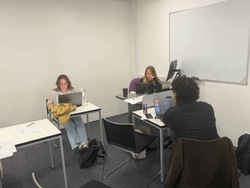
This session aptly named *Printing Error* took place at the library, where we met to finalise plans for our engagement event at Brookfield Church. Despite the slightly chaotic title, things were actually very productive.

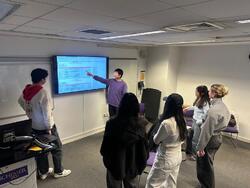
We reviewed a range of precedent images that we can show to the public, giving them something tangible to react to and helping us understand their preferences. Alongside that, we printed the church’s site plan (successfully, eventually), which will act as a key engagement tool, allowing people to physically point out where they think new facilities should be located.

We also mapped out a short presentation to clearly explain the project from start to finish keeping it simple and (hopefully) memorable.

On a more analytical side, we carried out a demographic study using local data. This helped us better understand the community we’ll be working with, and will also help us be more aware of whether the people engaging with us are truly representative of the wider area. Since we won’t have control over attendance, this adds an extra layer of insight and makes the whole process even more valuable as a learning experience.

All in all, a very productive session. We’ve prepped what we’re going to say, gathered all the materials we need, and are feeling ready (printing errors aside) for what’s next.
Posted 16 Apr 2026 13:01
Session 8: Measure Twice (…or Improvise Once)

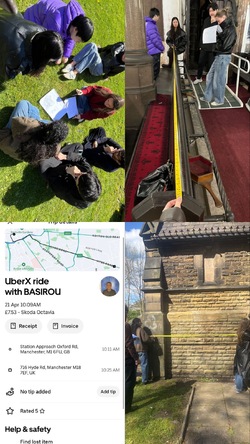
Today’s session started, as many of ours do, with a moment of reflection. Upon meeting this morning, we reevaluated the budget report we had previously submitted, particularly our travel costs. We had confidently estimated around £45 for a return bus trip for the whole group. In reality, the numbers had other ideas. On the day, Uber turned out to be both cheaper and faster, which felt like a small but satisfying win (sigh of relief from this car sick team member! )

Once on site, our collaborator gave us a tour, which helped ground a lot of our ideas. We discussed the direction of both an external temporary structure (to sidestep planning requirements) and an internal permanent intervention that respects the Grade II* listing. It was a really useful conversation that clarified where we’re heading. We also took photos of key areas, elevations, and services to build up a solid reference base.

Then came the survey.

We carried out both internal and external surveys of the relevant spaces, armed with tape measures and optimism. Measuring larger areas—especially the nave—proved to be more challenging than expected. Safe to say, longer tape measures would have helped. A lot.

Still, we got what we needed, and left with both measurements and a bit of perspective.

Productive, slightly chaotic, and a reminder to come better equipped next time
Posted 21 Apr 2026 17:58
Session 9: The “Everyone Has an Opinion” Session

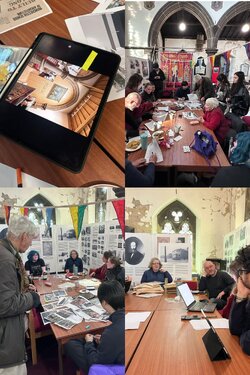
This session was where things got real. No more guessing, no more “this might work”. We finally took our ideas to Brookfield Unitarian Church and let the community tell us what they actually think. Slightly terrifying, but mostly very useful.

We set things up with our plans, precedent images, and our carefully prepared (and rehearsed) explanation of the project. The idea was simple: keep it open, let people react, and see where the conversation goes. And it definitely went somewhere… in about ten different directions at once.

A big theme that quickly emerged was the classic open vs closed debate. Some people loved the idea of flexible, open spaces, while others immediately asked for partitions, dividers, and ways to split things up. But (of course) no one wanted to completely lose connection. People still wanted to see and hear what’s happening in the main hall, especially from the kitchen. So essentially: divide the space, but don’t actually divide it. Simple.

Accessibility also came up, and this was a bit of a reality check. While the church is clearly inclusive in its values, the building itself doesn’t fully support that. A wheelchair user pointed out that although there is a movable ramp to come inside, the movement inside is still quite limited.

Then came the very real, very practical concerns. Heating, for example, takes over three hours (yes, three hours), which explains a lot. Naturally, people suggested breaking the space into smaller sections to make it more efficient. Storage also became a surprisingly big topic, like everything from general storage to “where do we keep the lawn mower?” made an appearance. Design meets reality.

The kitchen turned out to be more important than expected. Not because of cooking (tea and coffee seem to be the main event), but because it’s a social space. People want to stay connected while using it. Hence, ideas like a serving hatch, seating nearby, and maintaining visibility into the main hall.

We also briefly touched on bigger ideas like temporary structures and external additions… which were quickly brought back down to earth by planning rules and costs. A gentle reminder that architecture does, in fact, have limits.

All in all, a slightly chaotic, very honest, and genuinely insightful session. Lots of opinions, a few contradictions, but exactly what we needed.
Posted 21 Apr 2026 18:11
Session 10 : The Publication Preparation Session
This session marked our first meeting after the intense assignment submission period, giving us a chance to regroup and reflect on the progress we had already made. We began by discussing our previous work, particularly our experiences during the site visit and the key observations and insights we gained from it. It was useful to revisit these discussions together, as they helped reconnect us with the project and clarify our overall direction moving forward.
The main focus of today’s meeting was preparing the content for our publication. We outlined the key sections that needed to be included, such as the historical background of Brookfield Church, site analysis, demographic research, design concepts, and our proposed scheme. Once the structure was agreed upon, we split into smaller groups to begin producing the different sections.
Throughout the process, there was a very collaborative atmosphere. We regularly shared ideas, reviewed each other’s work, and made adjustments together to improve the clarity and quality of the content. By the end of the session, we successfully completed the initial research and analysis section of the publication, giving us a strong foundation to build on in the next stage of the project.
Posted 12 May 2026 14:49
Session 11: The Synthesis and Refinement Session
Today’s session was highly productive as we undertook several critical tasks to propel our project forward. First, we took the time to review and reflect on the sections we completed yesterday, ensuring that our overall trajectory remains aligned with our core objectives. A major focus was revisiting and refining the historical timeline of Brookfield Church. We recognized the need to correct specific historical details to guarantee their accuracy, as any misinterpretation of the past could potentially mislead our future design decisions. This rigorous fact-checking process ensures that our proposed scheme is built upon a solid and authentic foundation.
Secondly, we dedicated a significant portion of the meeting to unifying our drawing and graphic styles. By establishing a standardized visual language across all our diagrams and plans, we are not only presenting ourselves as a more cohesive and professional team, but also ensuring that the publication reads as a complete, unified body of work. This harmonization of aesthetics is crucial for eliminating any disjointedness between individual contributions, ultimately elevating the overall quality and clarity of our final presentation.
Finally, we shifted our focus to the digital models, engaging in continuous adjustments and refinements. This phase was deeply collaborative, as we actively brainstormed and tested different spatial solutions together. By pooling our diverse perspectives and constructively critiquing each other's ideas, we are constantly pushing the boundaries of our design. This collective effort and shared dedication reflect our ongoing commitment to achieving the best possible outcome for the final project submission.
Posted 13 May 2026 10:20
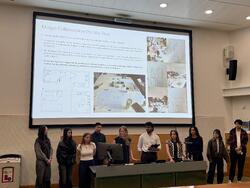
This session was all about getting ready for the presentation. We spent most of the time writing our script, refining what we wanted to say, and making sure the project could be explained clearly and in the right order.

While working on the script, we also finalised the form of our design. This was helpful because it meant we were no longer speaking about possibilities, but about a clearer final proposal that everyone in the group understood. We also looked back at church precedents again, making sure our ideas were still grounded in research and relevant examples.

To finish the session, we did a short rehearsal of the presentation. It was useful to test the timing and see whether anything needed to be shortened or adjusted. Luckily, the timing worked well, and we were able to keep it within the required length.

A calm but important session. Less about changing the design, and more about making sure we could present it with confidence and clarity.
Posted 13 May 2026 15:31