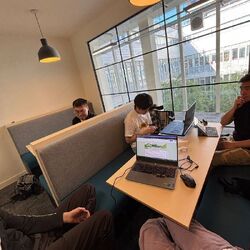
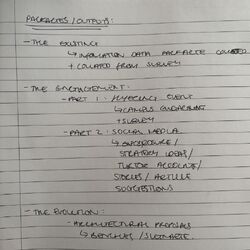
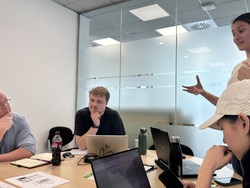
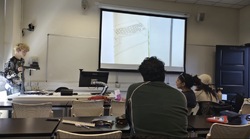
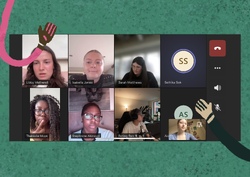
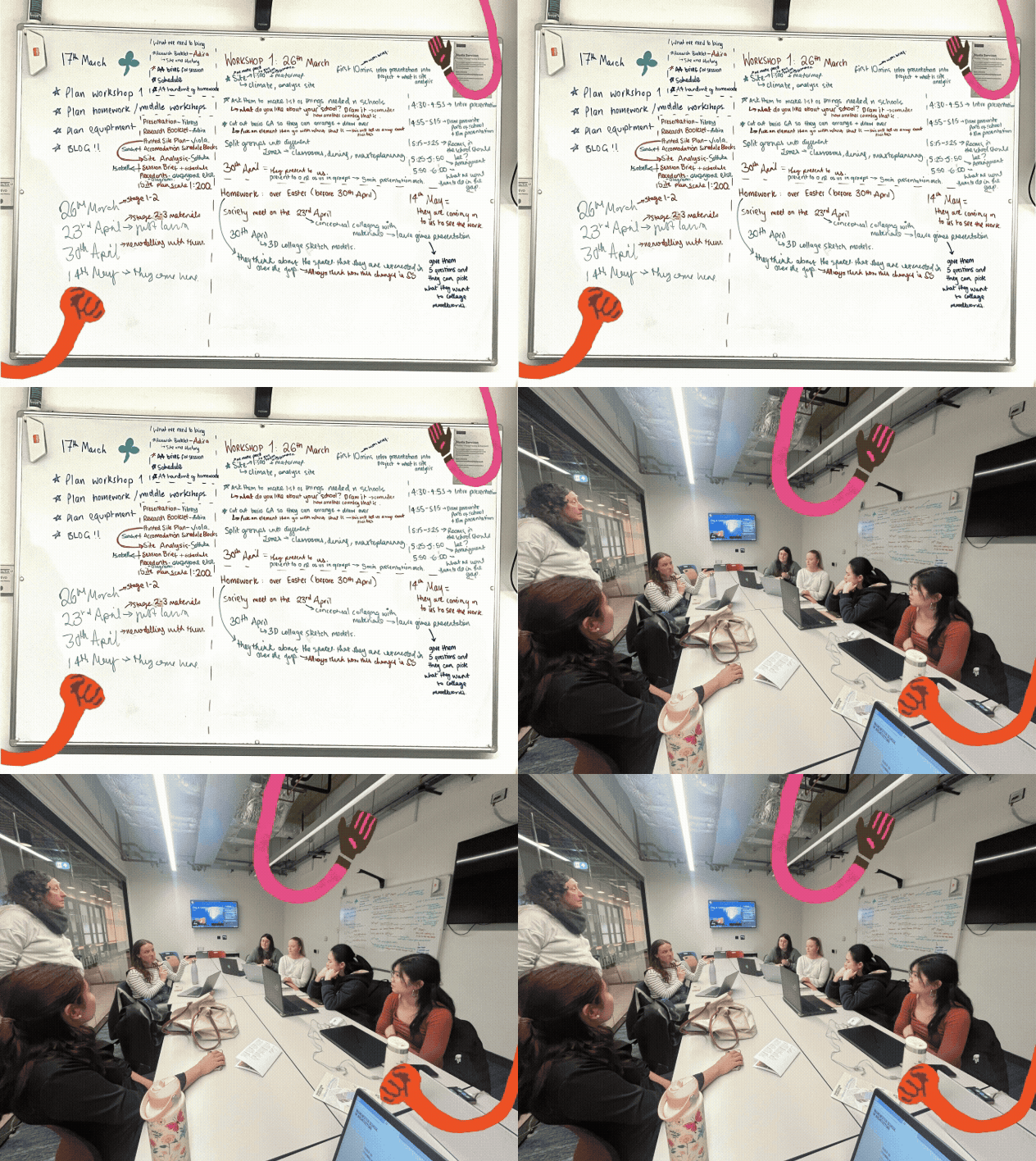
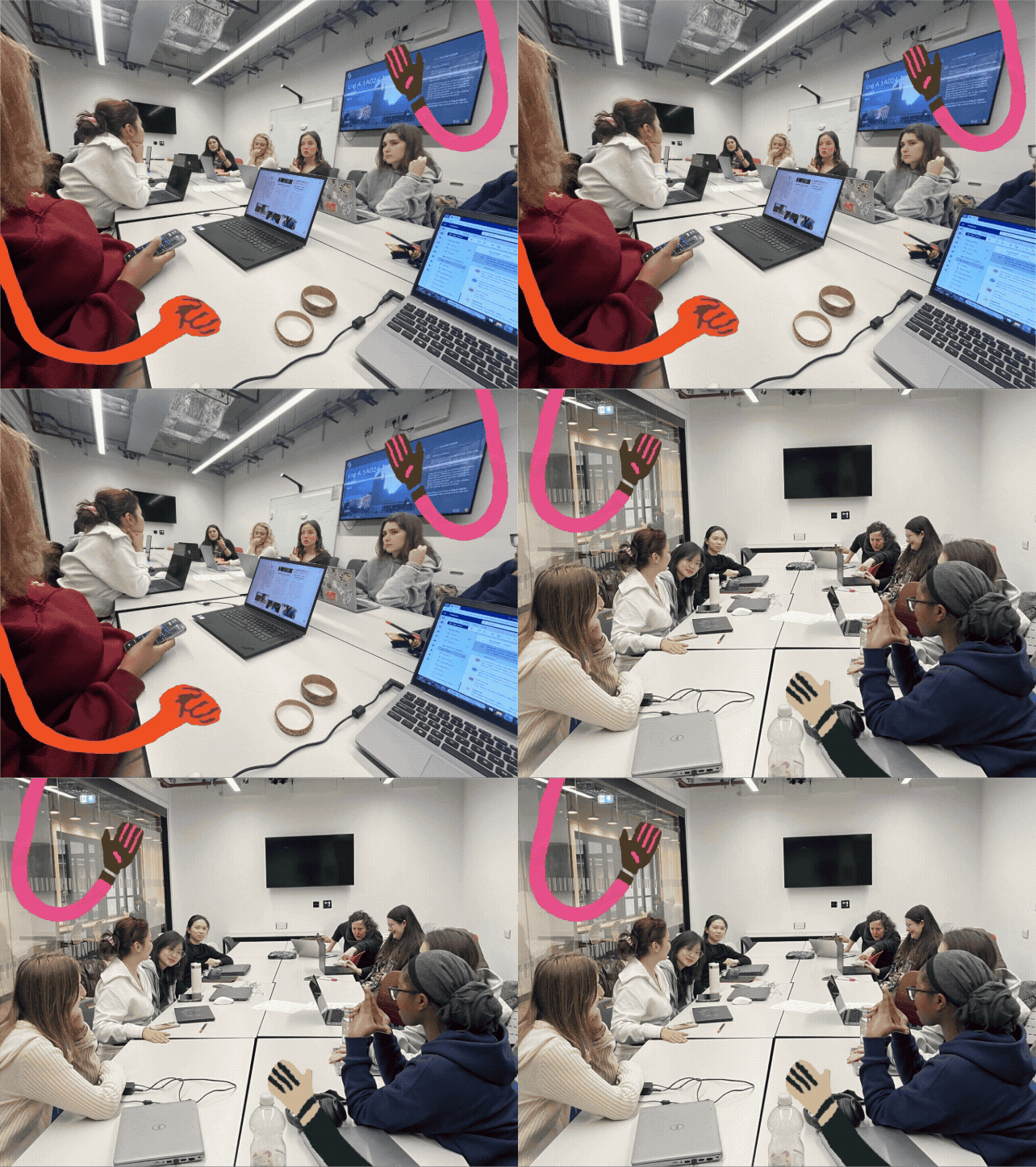
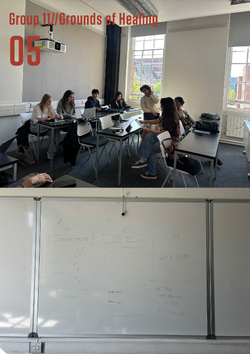
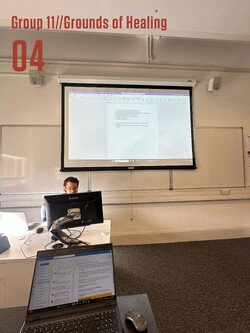
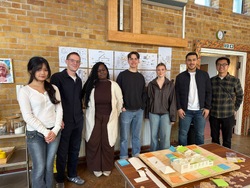
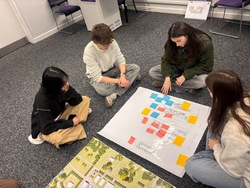
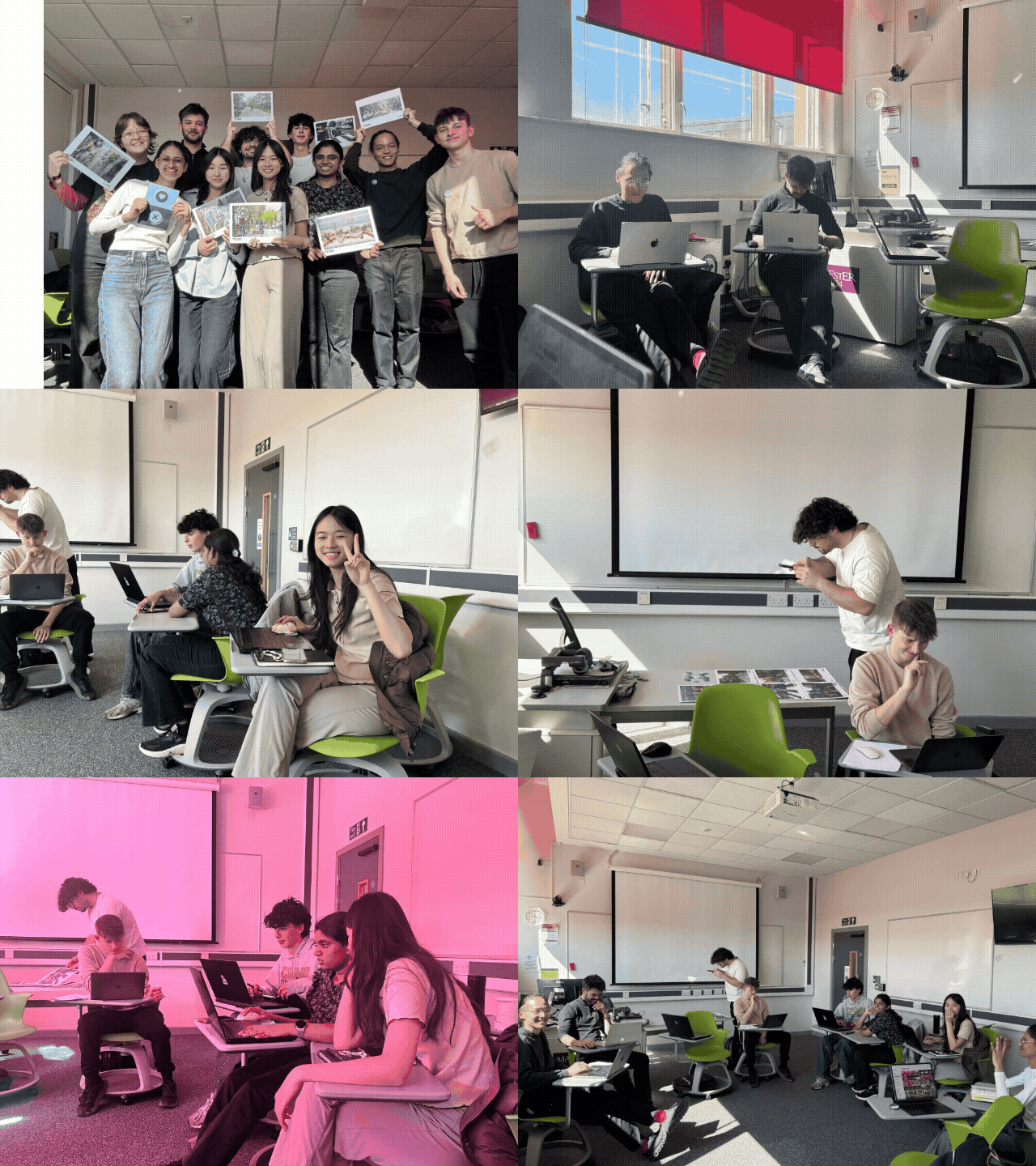
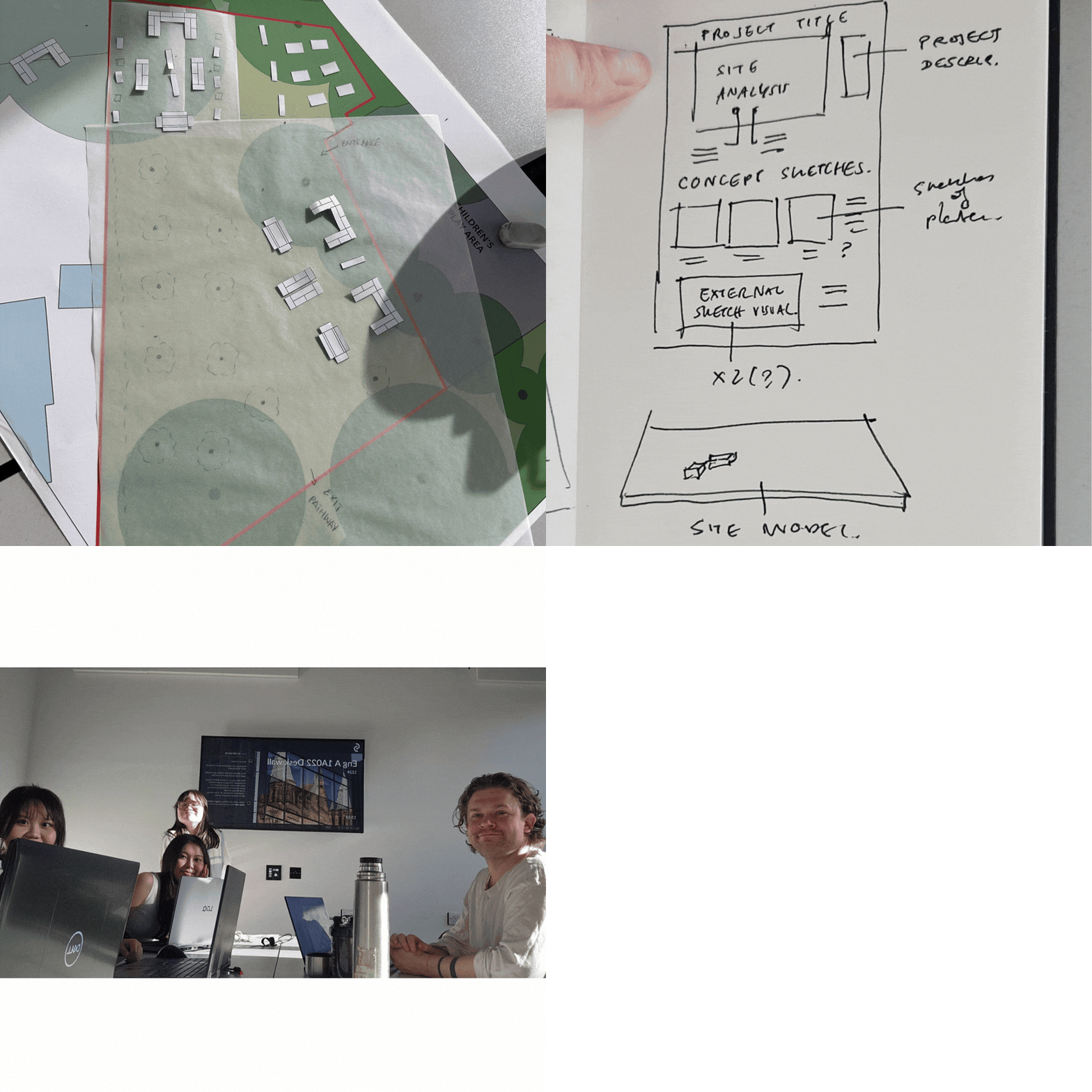
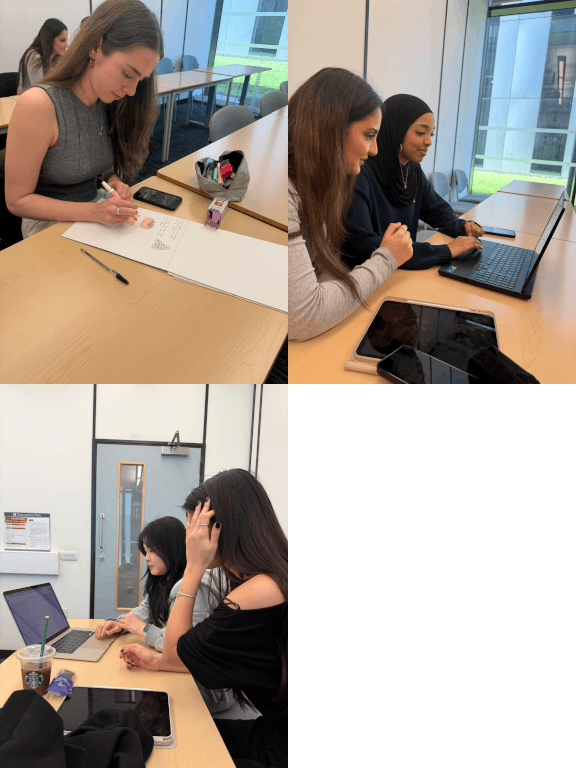
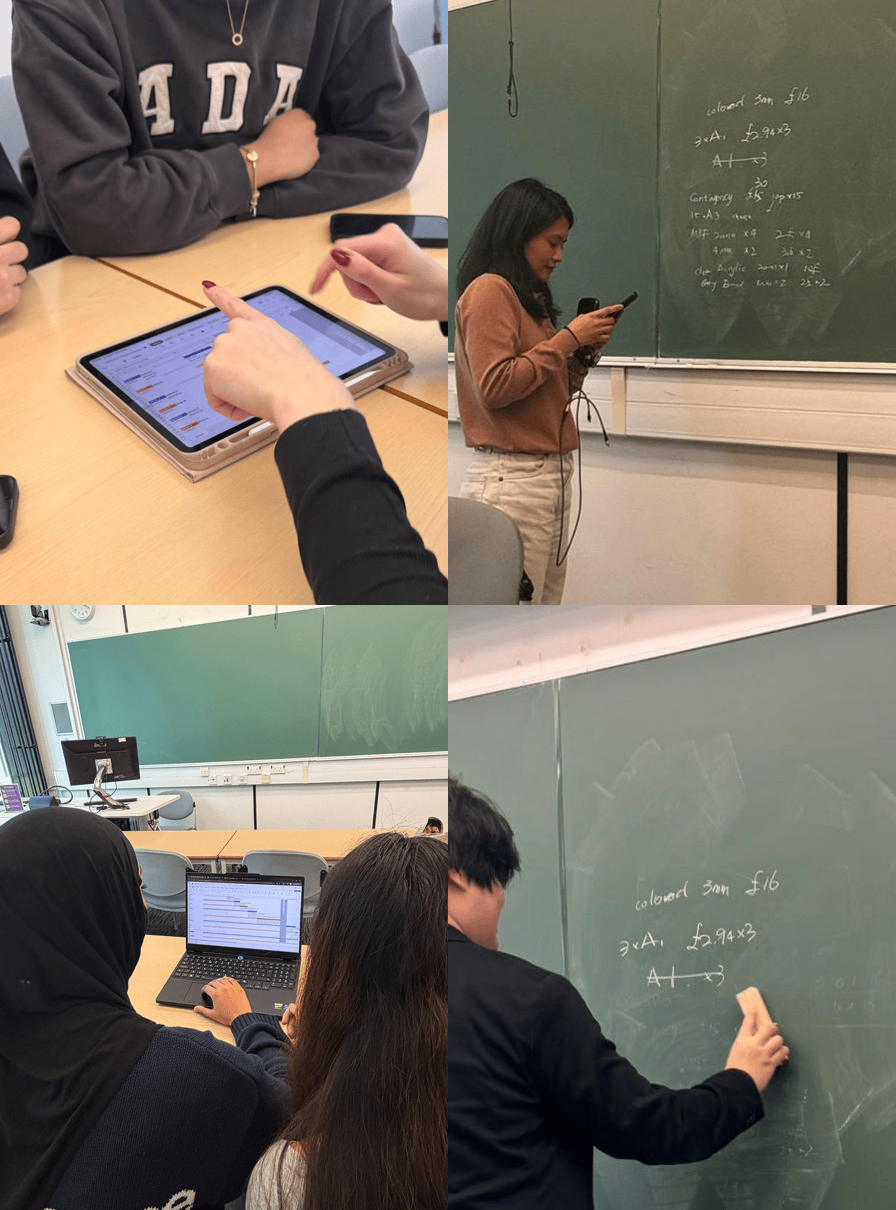
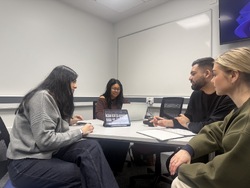
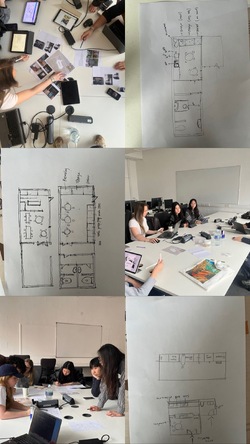
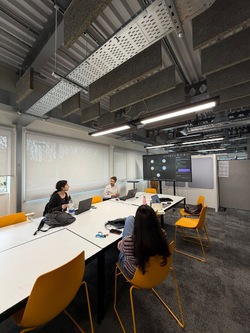
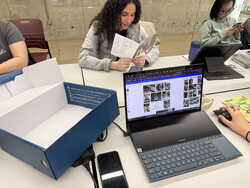
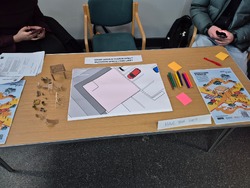
28/04/2026. The plan for this meeting was to review our designs as a group for the five proposed bench types before adding these to the survey and conducting a final check of the survey and its questions, before meeting the collaborator.
Eddy from CPRE met with us to review the specific wording of different aspects of the survey and raised a few issues and suggestions he had which was extremely helpful!
21/04/2026. We met as a group to finalise the engagement activity and the details surrounding the survey, flyer and outputs for the collaborator. The design direction for the benches was agreed and tasks distributed in the team.
SESSION 7: ENGAGING THE COMMUNITY: WORKSHOP AT THE CFC
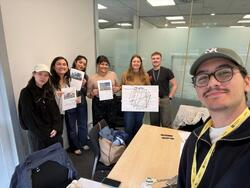
Having arranged with Mark and Lawrence to turn up to the Counselling and Family Centre at 10am, three of us, Taecho, Sofia and Nicolas, met up at the MTC just before 9am to pick up some of the equipment we would need and headed to the tram stop at St Peter’s. The tram ride was exciting - two of us had never been to the CFC before, or to Altrincham at all. Once we arrived, a short walk brought us to the building where we met up with Libby - who had driven instead, which made more sense for her living at home in Stockport. We made our way in slightly ahead of schedule, signed it at the reception and sat down in the cafe to prepare for the upcoming engagement activity.
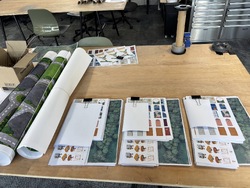
We had with us 2 large A2 sheets which we had prepared in advance - one with options for potential colour palettes for the interior, and the other with a likes/dislikes and improvements column - as well as several printouts of a plan view of the CFC’s cafe and common room and cutouts of rooms within it, as well as with cutouts of furniture. While we were confident this would be easy to understand, and, ultimately, fun, we had to find a way to present this in an understandable way. Handily, we were given permission to use a large whiteboard that was standing in the cafe against the wall - so we stuck everything on, and, after some deliberation by means of having breakfast and a coffee, were ready to go.
The first two people we asked before going into the common room were two guys who worked at the CFC. They reacted extremely positively to the tasks and were very happy to take part and answer our questions - the main thing we got from them was that the layout of the cafe needed to be improved. Confident the tasks would work, we headed into the common room.
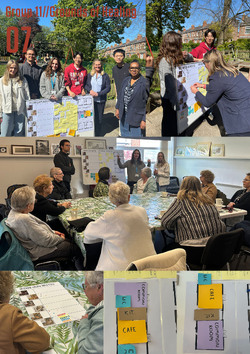
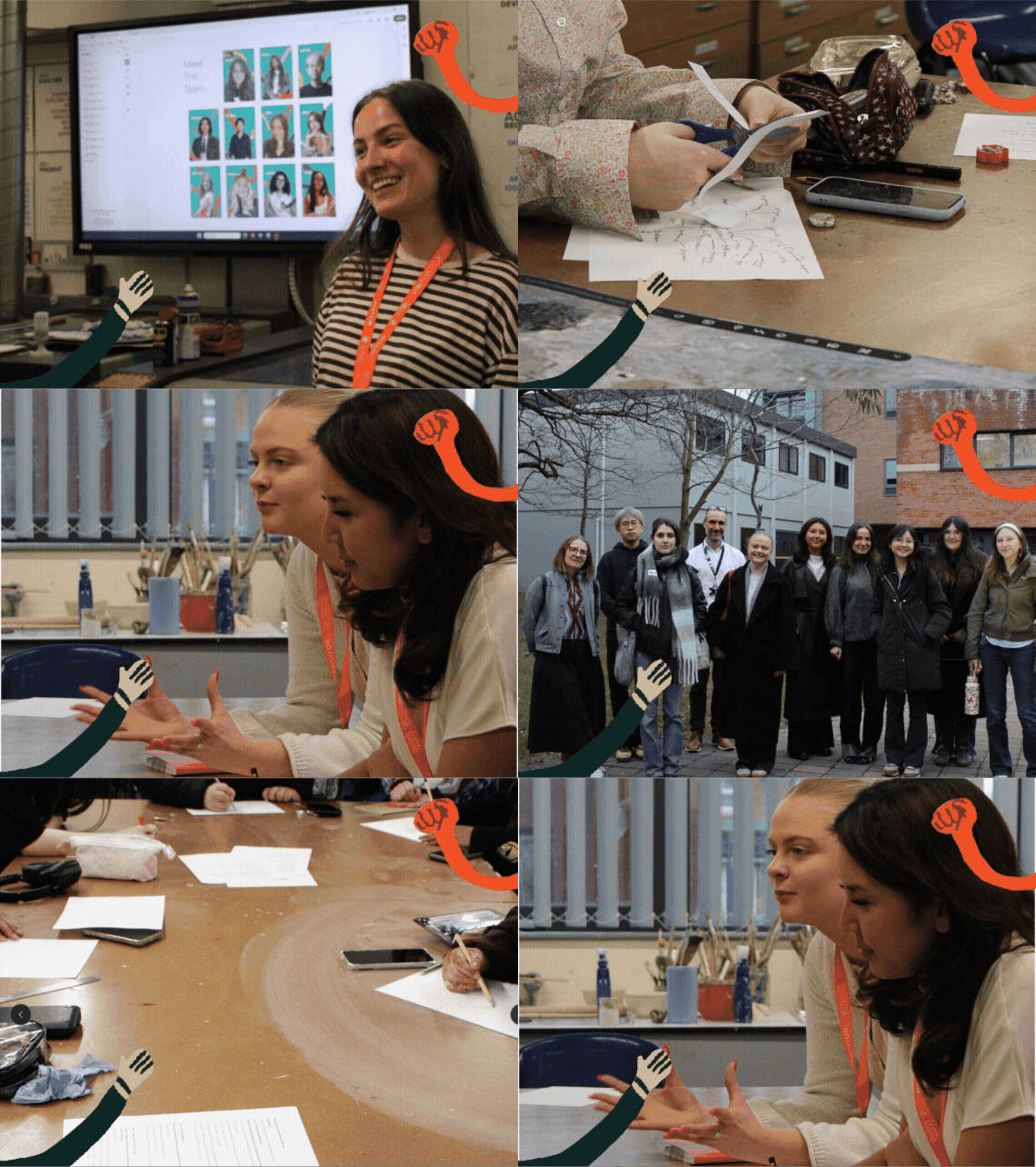
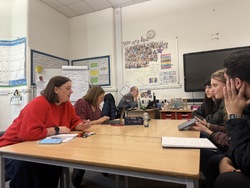
The main group of people we were to ‘survey’ were the Cafe friday club, a group of elderly people who gathered at the same time every week to socialise. We first entered and presented ourselves - explaining who we were and what we had come to do - after which we brought the whiteboard in. Sofia took control at this stage, explaining what each task we had created was about, with some of the rest of us adding to what she was explaining when it was necessary. Starting with the likes/dislikes and improvements suggestions task, the leader of the cafe Friday club started; soon, though, more people were contributing to the discussion, and in no time everyone was chipping in. While some of us listened, others took notes of what was being said. And there was a lot - from how there is no good storage space to how the lights were hideous, and from how they thought it was a shame their art was not on display (the common room is also being used for other things - such as for an art club) to how the ceiling was sagging and had already had to be repaired once recently when some squirrels got inside.
All those present also took turns to take a look at the colour palettes we had chosen and to place a vote using stickers next to their preferred option. Though we soon realised we had printed the colour palettes too small for comfort, Taecho was able to find them on his tablet and present them enlarged for the people to see better. Soon, a definite favourite emerged - the light, colourful colour palette which consisted of some soft greens, yellows and reds. As for room arrangement (the final task), we heard the same thing repeated - the toilets are inconveniently located (and should probably be moved somewhere outside), the kitchen could expand into where the toilets were currently, and the cafe needed reconfiguring and potentially expanding.
After around half an hour to 40 minutes with the cafe friday club we were satisfied we had gathered a fair amount of information and, conscious that they may want some time together to socialise, returned to the cafe, satisfied. We were not done yet, though - next we asked more members of reception for their opinion. One guy working in the cafe repeated what was said earlier - that he wished the kitchen was larger and that the cafe was better laid out - while another lady from reception that we had an especially long chat with was very enthusiastic about making better use of a dead space adjacent to the cafe which was lying empty at the date of visit, overgrown, but definitely with potential. Could that area turn into an outdoor seating area for use during the warmer months? Maybe even a pub garden?
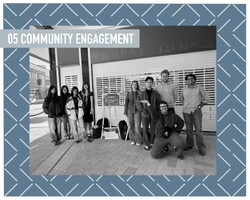
We finished our time there at around 12pm with some final photos in the outside area, where the four of us posed with several members of the CFC and with our board, by now covered in post it notes with likes, dislikes and suggestions for improvements, as well as in stickers by certain colour palettes. The final results were convincing - the soft colourful colour palette, second down on our list, was a clear favourite with several times more votes than the next most popular option. As for suggestions for improvements, some popular ones were improving the lighting, adding better storage, moving the toilets and making better use of the space available (both in the cafe and outdoors). Room layouts mirrored what people had said in the suggestions. We didn’t end up using the furniture cutouts.
We left shortly after, pleased, as Libby headed off home in her car while the rest of us took the tram back to Manchester.
Course: MA Architecture and Adaptive Reuse (AR)
Hello, everyone. My name is YUNCHEN YU. I'm from China. My undergraduate major was Interior Design in the field of Environmental Design. I am very interested in revitalizing and rejuvenating a place through renovation! This is my first time participating in MSA LIVE, which is organized by students from multiple majors. I hope to gain something from it and have a good time.
Today, following our workshop preparation from the previous day, we met to source the tools and stationery needed to bring the session together. This helped ensure we had everything required to run the workshop effectively and without interruption.
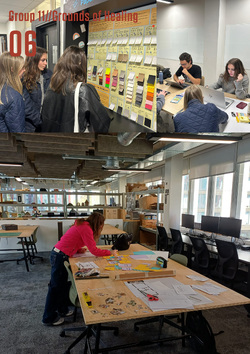
Afterwards, we made our way to MTC to prepare the materials. We hand-drew three sets of plans and created coloured cut-outs representing key spaces such as the WC, cafeteria, and workshop areas, allowing participants to rearrange them according to their preferences. In addition, we prepared a feedback sheet where participants could note what they like, dislike, and any improvements they would like to see.
We also developed an interactive exercise focused on interior colour palettes, offering a selection of options that participants could respond to using coloured sticky dots to indicate their preferences. This approach aimed to make the session more accessible, engaging, and easy to participate in regardless of background.
To ensure everything runs smoothly, we agreed to arrive at 9am the following day to set up ahead of the workshop, which is scheduled to begin at 10am with the group organised through our client.
On Wednesday 22nd April, we had a meeting with our collaborators, at the Transport for Greater Manchester building in Picadilly. We came prepared with all of our individual design sketches, as well as the final concept we had developed as a group.
During the meeting, we received a lot of positive feedback. Our collaborator seemed pleased with the direction the bus stop design is taking. We also exchanged new ideas, including adding charging points, toilet units and incorporating passive surveillance features.
We will now take this feedback forward and continue refining our design, making the necessary adjustments based on the collaborator’s suggestions.
By the end of the meeting, we were all very happy with the outcome. It feels like we are on the right path and only need to make a few small changes to better align with the collaborator’s vision.
Overall, we gained a lot of use insight, and the meeting was a great success
On tuesday 21st April, our group focused on developing design ideas using feedback from our previous engagement activity. We spent a significant amount of time creating and refining concepts believe our collaborator would find useful for their company.
After the design phase, we showcased each bus stop concept to our peers. Each person explained the reasoning behind their design and why they felt it aligned with the collaborator’s needs and expectations. Following this, we cane together as a group to create a final concept that combined features from each individual design.
By the end of the session, we had developed a concept that everyone agreed on and believed would meet the collaborator’s expectations: an adaptable bus stop made up of multiple units, each with its own function, such as seating, parcel lockers and a kiosk.
This session was highly productive and helped us prepare for a meeting with the collaborators the following day. Everyone was proud of the outcome and the deisgn we created.
23/04/26
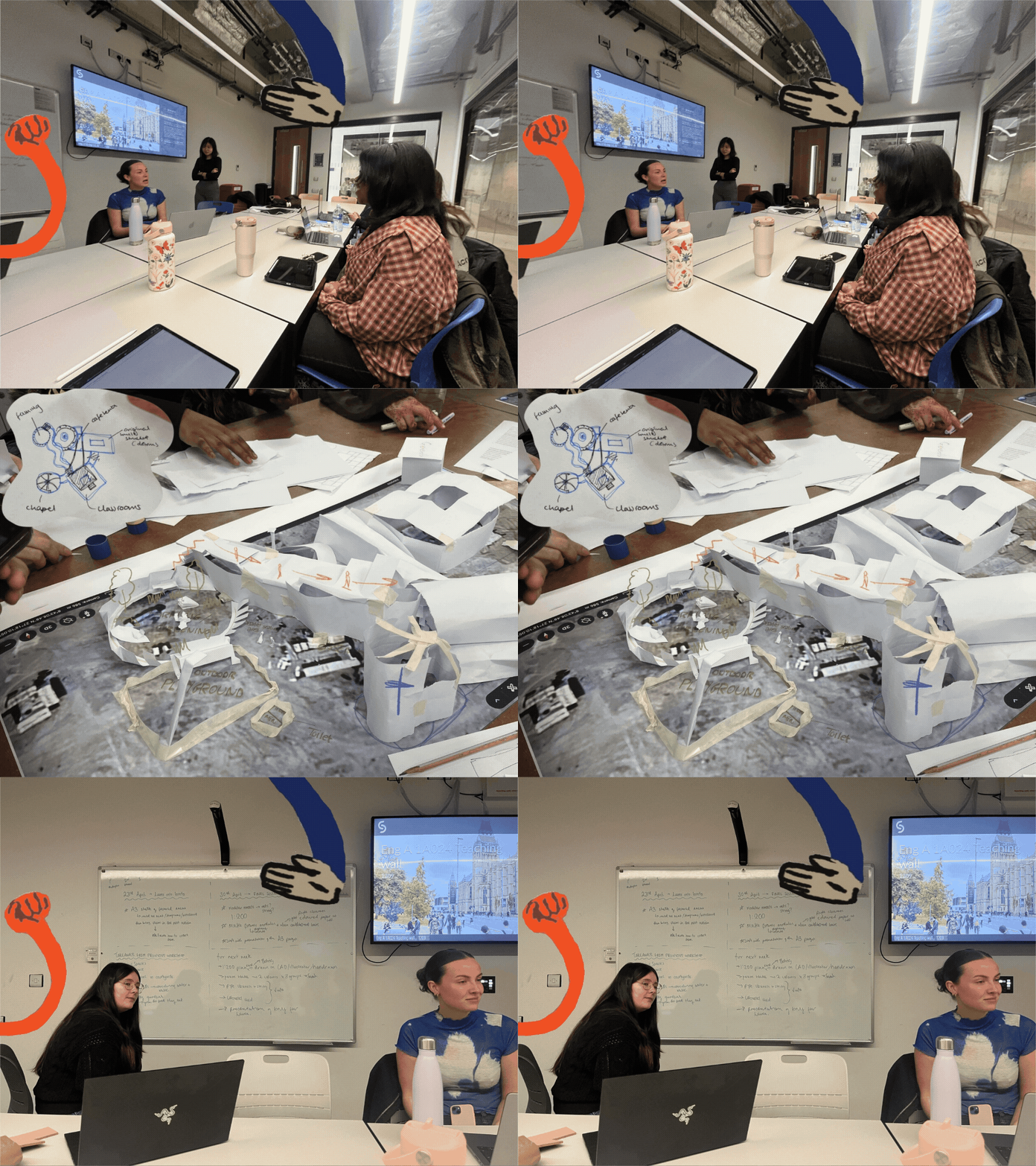
Today we came back from the Easter holidays and we were able to catch up on the first workshop we did with the students. We discussed the key takeaways from the previous workshop which included what the students valued within the site such as chapel, court yards to socialise, gardens to grow food… As this week Laura will be leading the workshop and we won’t be there, we thought of an exercise for the students to do this week which we sent to Laura which is zooming into a specific space in the school and doing research about it and representing that in any way they want e.g. collage drawings floorplan. This way this would lead us well into the next workshop next week where we could take in the research and use it our final design concept. Therefore we discussed what we will do in the next session which included making a modular model from foam cardboard and putting their spaces into 1:200 scale.
26/03/26
Today we held our first workshop of the students. It was great to meet who we will be collaborating with and get loads of new ideas for the design. It was interesting to see how different students had different ideas for what they like about their school and they had lots of different ideas and takes on how that would change depending on the context. In the second part of the workshop, we were able to visualise their ideas by working on the printed site maps which went really well. Some groups worked by cutting out the shapes using scale bars seeing how everything fits on site, some drew their ideas whereas some groups also worked in 3-D by creating models that they placed on the site. This way they were able to work with levels and overall it was interesting to see what they prioritised which helps us a lot further down the line when we finalise a brief for the school.
24/03/26
Today, we held a teams meeting to make sure we were prepared for our workshop later this week. We checked if the site maps were printed out, we discussed the precedents, site analysis we used for our presentations and went through any last minute checks and errors to make sure everything can go smoothly. We went over who will be present at the workshop and discussed our roles e.g who will be presenting, what groups we will get into as well as final checks about lanyards and ethical assessments.
17/03/26
We discussed what we did over the break as well as solidified our plans for the workshop scheduled on the 26th of March. We discussed site analysis as well as more information that Libby shared from Laura our collaborator when she had a meeting with her over the break. We discussed the best plan of action for the workshop aiming to get as many ideas out of the students as well as helping them think architecturally. We discussed ways to collaborate with the students most efficiently on the project by thinking of tasks like asking them what they like most about their school, drawing it and considering how it would change depending on where it is and its context. More tasks include cutting out basic site maps which they could work on and visualise their ideas. We decided the best way to do this was splitting groups into different zones and working by having two of us for every five or so groups of students. Having discussed these with Lindsay Bush we felt confident in our selected tasks for the workshop. We also gave each other tasks for the next week including printing out the site plan which would pick up a part of our budget analysis looking at precedence putting together the presentation and research booklet.
17/02/26
Today, we generated ideas for the upcoming Loreto College workshops. For example, we looked at collage methods to help students on understand spaces as well as starting to put together the research that would influence their architectural decisions for the conceptual design of the school.
Hi, my name is Ayesha! I am a first-year student at MSA. I am looking forward to working on my first live project with the charity Hyde Young People’s Enterprise (HYPE) to support the youth through our sports complex centre. This will build on my passion towards design where I can give back to the local community. I am looking forward to teaming up with my peers with different levels of knowledge to enhance my design skills and create something special for Hyde.
Today, during the first half of the session, we reviewed the publication document and discussed the upcoming submission. We reflected on our overall progress and assessed whether we are on track with our timeline, identifying any areas that may need more focus moving forward.
In the second half, we developed a fully revised plan for the workshop taking place on Friday. We discussed what we want to learn from the community and which questions are most important to ask. A key part of this conversation was considering how to make the workshop accessible to people without an architectural background, focusing on making it more tactile, interactive, and creative.
Following this, we compiled a list of materials and stationery required for the workshop and began organising the practical aspects, including the commute and overall logistics. This helped ensure that we are well-prepared and that the workshop can run smoothly.
Today, we had our last session pre-Easter Break. After submitting our risk assessment, ethics application, budget, and timeline, we came together as a group to reflect on the progress we have made so far. This gave us the opportunity to step back and evaluate how our project is developing, as well as how we are working collectively as a team.
We began planning for our community engagement workshops. We discussed potential approaches, the groups we aim to involve, and how these sessions could inform our design decisions. Having this conversation at this stage allowed us to be more intentional with our engagement and ensures that our project remains grounded in the needs of the community.
After our model was 3D printed, we organised a community outreach event at Dandelion to gain an understanding of what the community that use the space wanted us to focus on, after we prepared ideas to present to them. Doing this event allowed us to meet with some great characters within the community, and through various conversations we knew that the community had some great ideas for improvement, including temperature and volume solutions, particularly in the gym area, solar panels on the south facing roof, as well as dividers in the main hall of the church as it can be overwhelming for some users of the space. Part of our presentation was having participants place emojis of ideas and concepts they liked, with examples being thumbs up and down, hearts, energy and green spaces.
In todays group meeting everyone was in a positive engaging mood after a successful workshop with the volunteers at blossom. During the meeting we sat down around the site plan and carefully discussed each comment made by the volunteers, identifying key themes that emerged from the feedback. It was a truly productive session that helped us move our project forward ready for the action week.
W6: 21/04/2026 - 22/04/2026
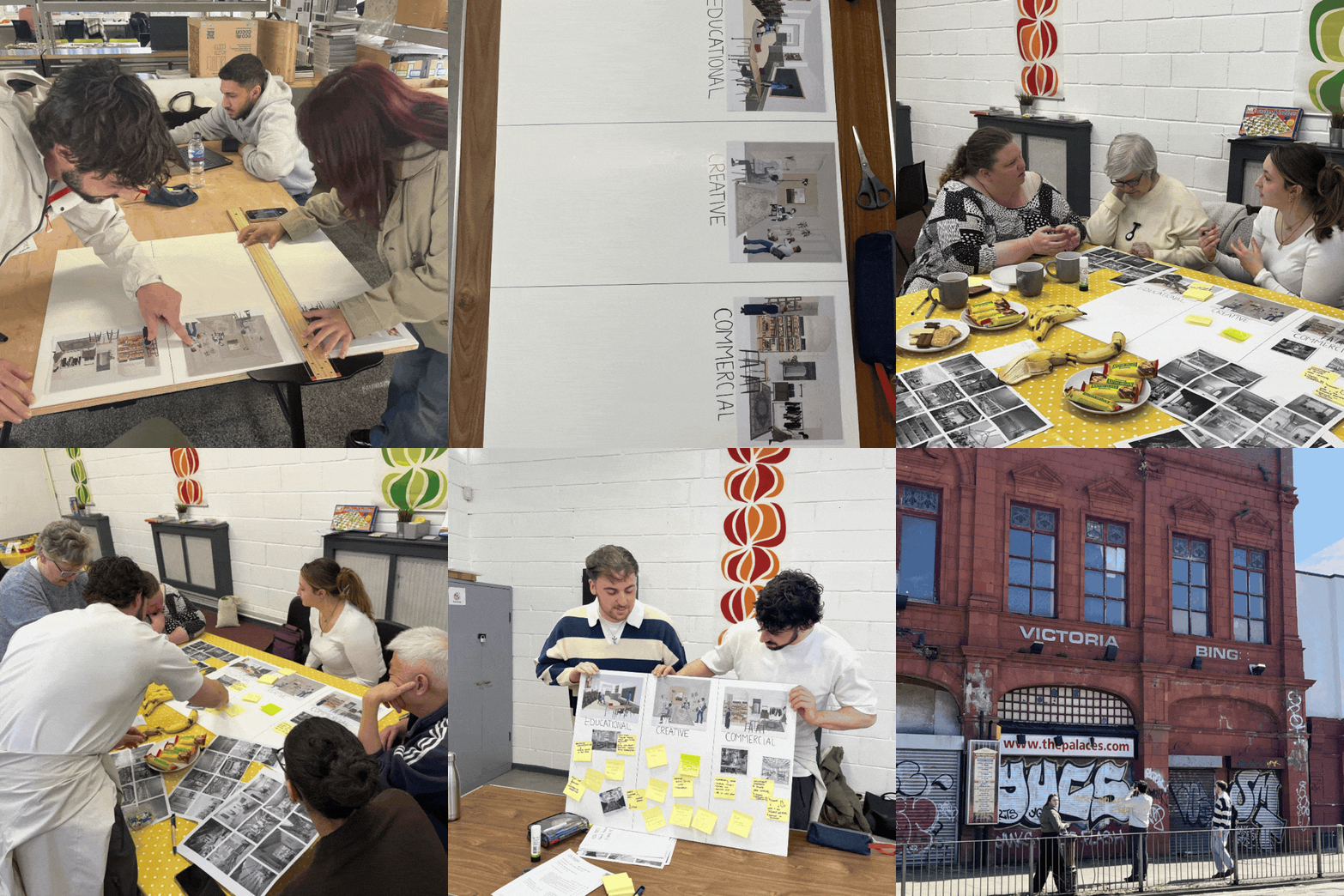
Over the past 2 days, we finally got a reply from the community center we will be engaging with, and we executed our engagement activity! On short notice, we were told that this Wednesday craft group session would have less attendance, however, we used that to our advantage, as we got to gain deeper personal insights and experiences from the elder demographic who have witnessed and experienced the evolution of the city.
We were very lucky to engage with such friendly locals, who were fortunately on the same page, agreeing with our concept of repurposing the theatre. This creative group really helped us gain some valuable insights on the types of spaces we would create inside the theatre, which worked really well alongside the precedents and visual imagery we provided.
Overall, our engagement was considered successful, we were able to identify the gaps in the city, and now we have a clearer direction on how to fill these gaps.
Since we could not access the inside of our building, we also conducted an exterior site visit, allowing us to get a closer idea of it's materiality, size, form and context.
I'm a first year MArch student at Manchester School of Architecture and grew up in the countryside before moving to Leeds for my undergraduate degree. Living in Yorkshire created a great appreciation for walking and hiking, so I'm extremely excited to be working with Greater Manchester Ringway to encourage more people to walk the routes and get out into nature!
/Ziying He
//I live in Kunming, Yunnan—a city especially favored by sunlight, and one of China’s most soulful coffee-producing regions. Even the air here seems to carry a hint of bitterness followed by a lingering sweetness.
//In moments when work wears me down, I turn to a restrained and rational Americano to bring myself back to a state of clarity and efficiency. But on an afternoon when the sunlight is just right, I prefer to slow down and cradle a soft, velvety latte—letting sweetness and bitterness intertwine on my palate, and allowing time itself to feel a little less urgent.
//Perhaps, in the end, we all need a touch of romance to push back against the rough edges of life.
This session was where things got real. No more guessing, no more “this might work”. We finally took our ideas to Brookfield Unitarian Church and let the community tell us what they actually think. Slightly terrifying, but mostly very useful.
We set things up with our plans, precedent images, and our carefully prepared (and rehearsed) explanation of the project. The idea was simple: keep it open, let people react, and see where the conversation goes. And it definitely went somewhere… in about ten different directions at once.
A big theme that quickly emerged was the classic open vs closed debate. Some people loved the idea of flexible, open spaces, while others immediately asked for partitions, dividers, and ways to split things up. But (of course) no one wanted to completely lose connection. People still wanted to see and hear what’s happening in the main hall, especially from the kitchen. So essentially: divide the space, but don’t actually divide it. Simple.
Accessibility also came up, and this was a bit of a reality check. While the church is clearly inclusive in its values, the building itself doesn’t fully support that. A wheelchair user pointed out that although there is a movable ramp to come inside, the movement inside is still quite limited.
Then came the very real, very practical concerns. Heating, for example, takes over three hours (yes, three hours), which explains a lot. Naturally, people suggested breaking the space into smaller sections to make it more efficient. Storage also became a surprisingly big topic, like everything from general storage to “where do we keep the lawn mower?” made an appearance. Design meets reality.
The kitchen turned out to be more important than expected. Not because of cooking (tea and coffee seem to be the main event), but because it’s a social space. People want to stay connected while using it. Hence, ideas like a serving hatch, seating nearby, and maintaining visibility into the main hall.
We also briefly touched on bigger ideas like temporary structures and external additions… which were quickly brought back down to earth by planning rules and costs. A gentle reminder that architecture does, in fact, have limits.
All in all, a slightly chaotic, very honest, and genuinely insightful session. Lots of opinions, a few contradictions, but exactly what we needed.
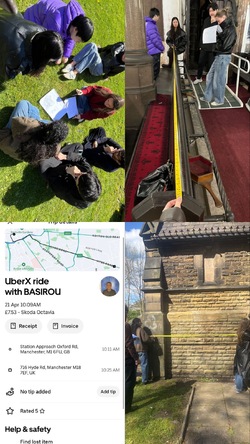
Today’s session started, as many of ours do, with a moment of reflection. Upon meeting this morning, we reevaluated the budget report we had previously submitted, particularly our travel costs. We had confidently estimated around £45 for a return bus trip for the whole group. In reality, the numbers had other ideas. On the day, Uber turned out to be both cheaper and faster, which felt like a small but satisfying win (sigh of relief from this car sick team member! )
Once on site, our collaborator gave us a tour, which helped ground a lot of our ideas. We discussed the direction of both an external temporary structure (to sidestep planning requirements) and an internal permanent intervention that respects the Grade II* listing. It was a really useful conversation that clarified where we’re heading. We also took photos of key areas, elevations, and services to build up a solid reference base.
Then came the survey.
We carried out both internal and external surveys of the relevant spaces, armed with tape measures and optimism. Measuring larger areas—especially the nave—proved to be more challenging than expected. Safe to say, longer tape measures would have helped. A lot.
Still, we got what we needed, and left with both measurements and a bit of perspective.
Productive, slightly chaotic, and a reminder to come better equipped next time
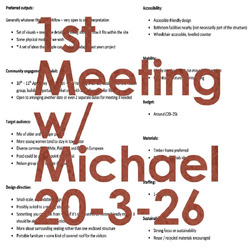
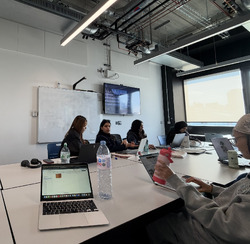
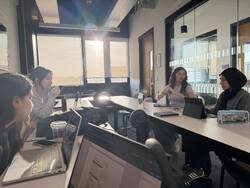
On Friday we finally had our first meeting with Michael from In-situ. We used the opportunity to ask questions about the brief and the kind of outputs that he wants. We also discussed a possible site visit as long as we can find a date that works for us and Michael.
We can now begin working on our design as Michael gave us more detail about what he wants, including the materials he wants used, an estimated budget, the level of accessibility required in the design, and the requirements of the cafe in terms of size and capacity.
Michael discussed us producing a series of drawings and visuals along with a model to communicate our design. We will need to divide these outputs between us based on our strengths.
This initial discussion with our collaborator has helped to focus our design as Michael emphasised the importance of diversity in the community, a desire for the structure to be transportable so that it can be used once the development of the shopping centre is complete. He also asked for us to use recycled materials as much as possible for the design and final cafe.
We’ve now finalized our core design ideas and started moving them from concept to paper and into detailed renderings. After the Easter break, each team member shared their individual progress. Through a round of peer feedback, we were able to collaboratively refine our approaches before moving into the next phase of development.
Over the Easter Holiday, we worked individually on concept development for the design. Sketches and precedent study inspirations are shared on a common drive for team review. Additionally, we divided up the specific tasks required for the final submissions and created a detailed plan for the coming weeks.
We gathered together to finalise the submission documents. Following that, we established our initial concept for the final design. We then divided the work among the group according to each member’s expertise, aiming to utilise our diverse skills across different areas in order to develop a design that is holistic, functional, and aesthetic.
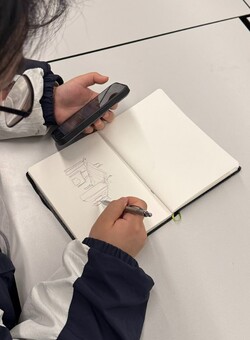
Alongside the SketchUp modelling session today, one of our first year students took some time to hand sketch a proposal for an outdoor seating area for the existing café at Seedley Pavilion.
The sketches looked at how seating could be arranged to make better use of the outdoor space around the café, complimenting the garden environment and encouraging people to linger and connect with the space. It was a good reminder of how much can be communicated through a simple pencil drawing, and the sketches will serve as a useful reference as we continue to develop the wider masterplan vision for the site. Thanks Tina!
Today we held our last official meeting before our intensive week begins on the 11th of May, and it was a really productive session to round off this phase of the project.
The main focus of the meeting was continuing our design work, with everyone working individually on their own section of the site model. The plan is to combine all of these components together to produce the walk-through video, so it was important to get as much modelling done as possible before the intensive week.
One of the highlights of the session was seeing the Masters students take the lead in teaching the first years how to use SketchUp for the first time. It was a great opportunity for the group to share skills across year groups, and the first years picked it up quickly. Having everyone able to contribute to the 3D model directly will make the process of bringing it all together much smoother.
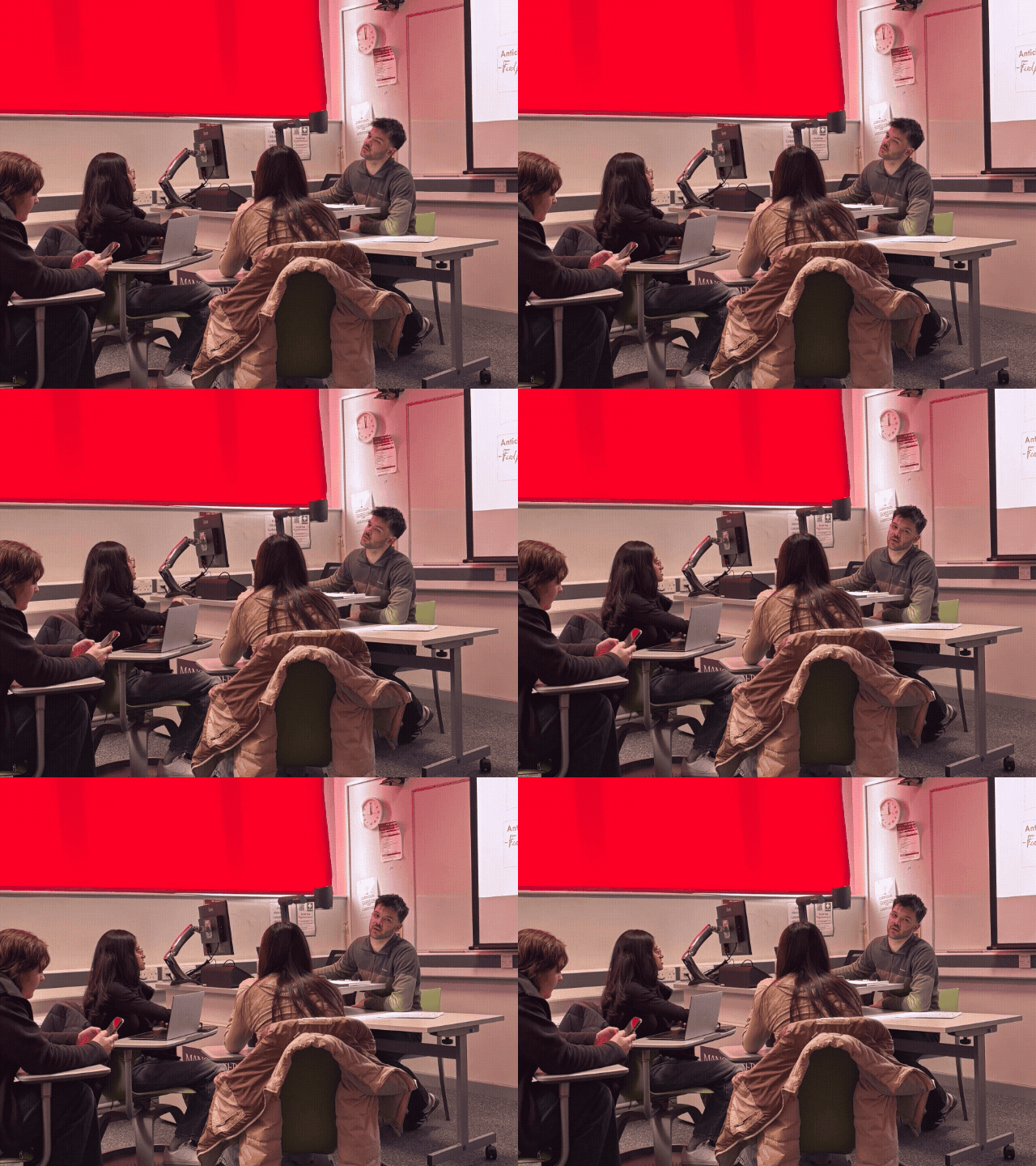
In the final week of regular MSA live meetings, we discussed what we’ve done so far, covering engagements, past sessions and more. We were joined by a MLA1 student, prompting reintroductions and a good summary of what our project involves. We then explored what there was still to do, planning our presentation, and intensive week, forming an action plan. We then divided into groups, each taking on a different task. It was a very productive session!
With the weather so good and the meeting with our collaborator, Michael, still pending, we prioritised efficient blog post creation during our 3rd session to maximise our time in the rare Mancunian sunshine. The session also gave us a chance to deepen our understanding of the module brief and to refine a list of questions to ask Michael during the scheduled meeting. Escaping the UoM Uni Place building by 3.30 pm, we left a note for our group supervisor explaining the reason for our absence.
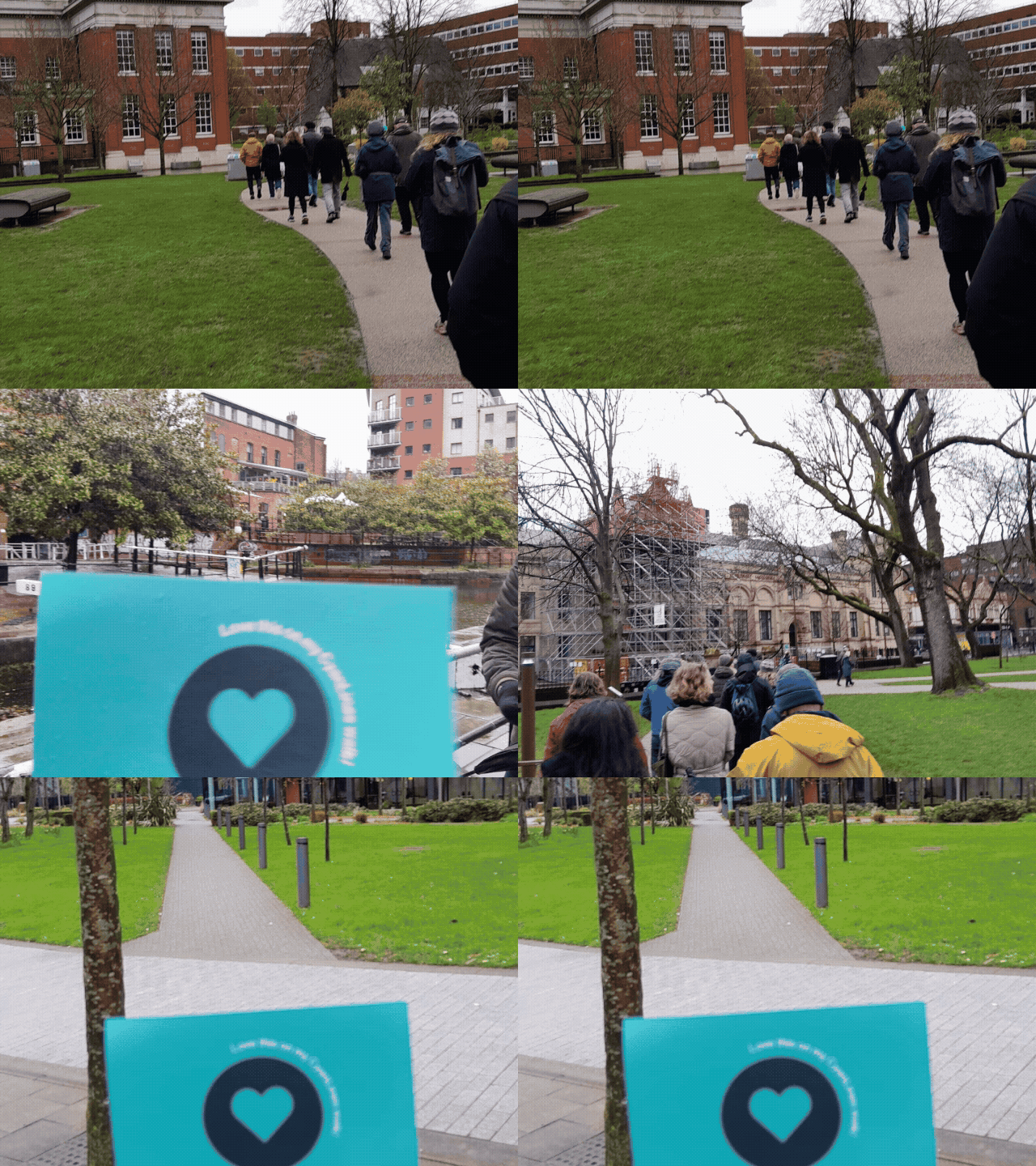
In the afternoon of Sunday 26th March, we continued out into the rainy Manchester weather, and met with Cyanlines for their guided walk along their Cyanline 3. Along the route we learnt a lot about the features of the route that helped them plot the line, also allowing us take inspiration for our Cyan+ line. As well as learning a lot about the history of Manchester. Talking to others on the tour allowed us to gain useful insight on what they value about Cyanline 3 giving us a lot to consider when furthering our own Cyan+ line proposal.
At the end of the walk we had the opportunity to tell the group about our project, sparking interesting conversations and ideas generation!
We were all relieved that by the end of the walk, the rain had cleared!
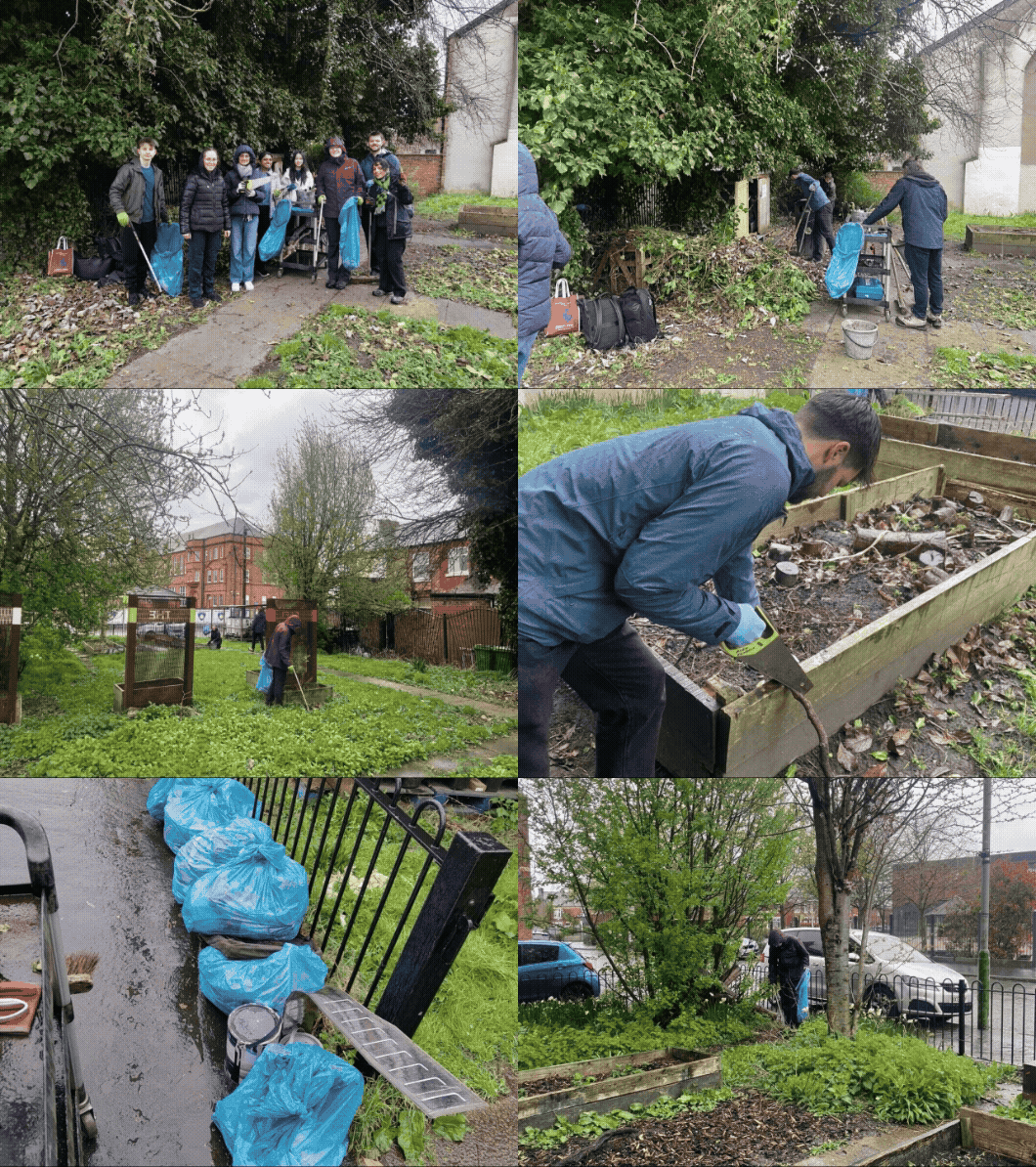
On Sunday 26th of March, we braved the rain, and visited the Feel the Rhythm Pocket Park to volunteer with helping them prepare the park for the spring and summer gardening season! We helped litter pick, clear fallen leaves and branches, and identify elements of the park, such as fallen planter bed walls, that may need attention after the winter. While doing all of this, we chatted with the other volunteers and gained an insight into how the pocket park is run and how it is used by the community. We also had the opportunity to ask them a few questions about our proposal and which elements they felt were best and which needed more work. This was an extremely valuable experience for all of us!
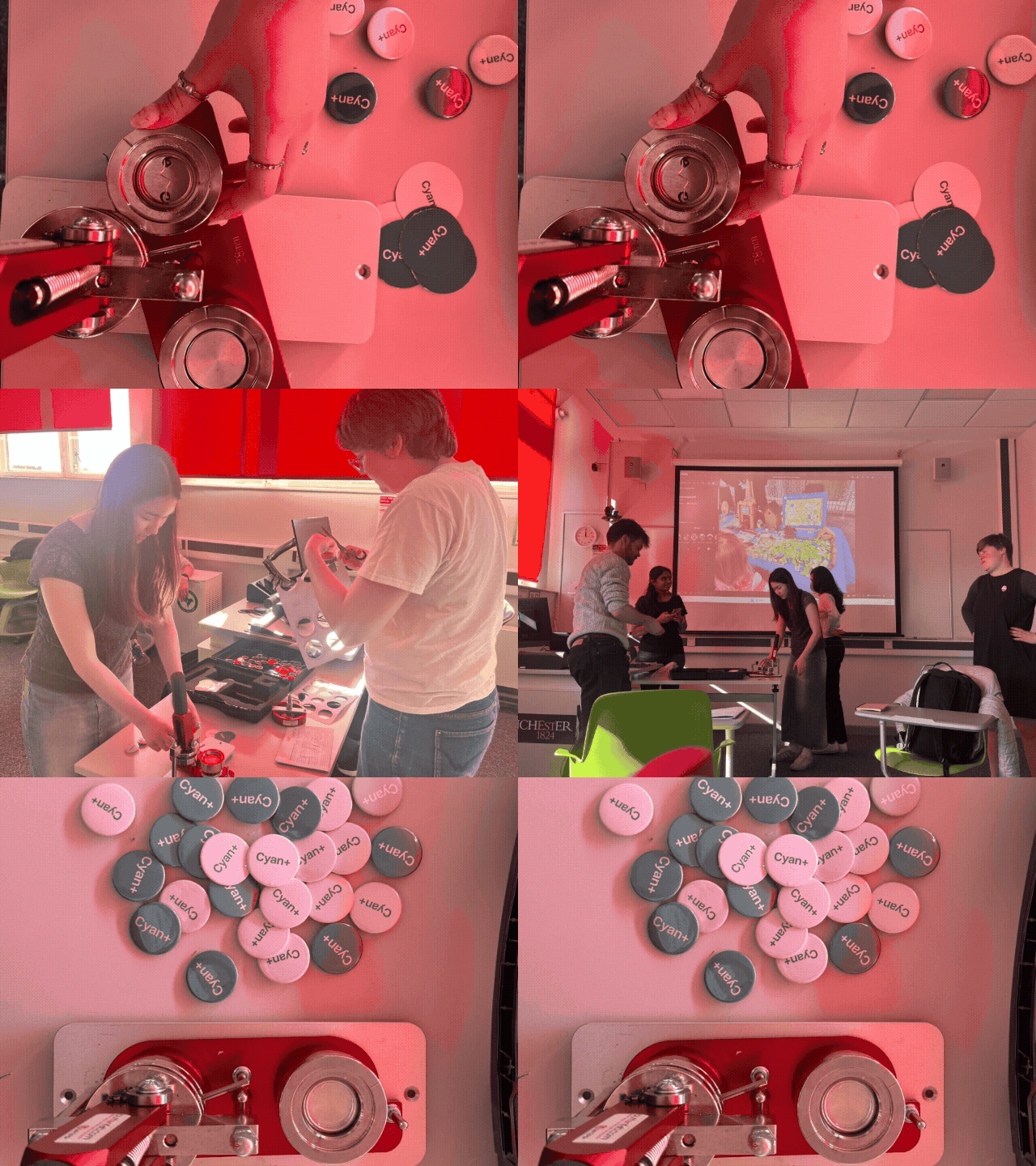
In our recent Cyan+ meeting, we made badges in preparation for our upcoming engagement activities. We all had a chance to use a badge making machine and created badges to hand out to the public as a reminder of what our project means for Manchester.
We also gathered a set of precedents to show during our engagement activities in Platt Fields Park and as an inspiration for our plans to improve our new Cyanline (Cyan+).
24/3/26 Fifth meeting
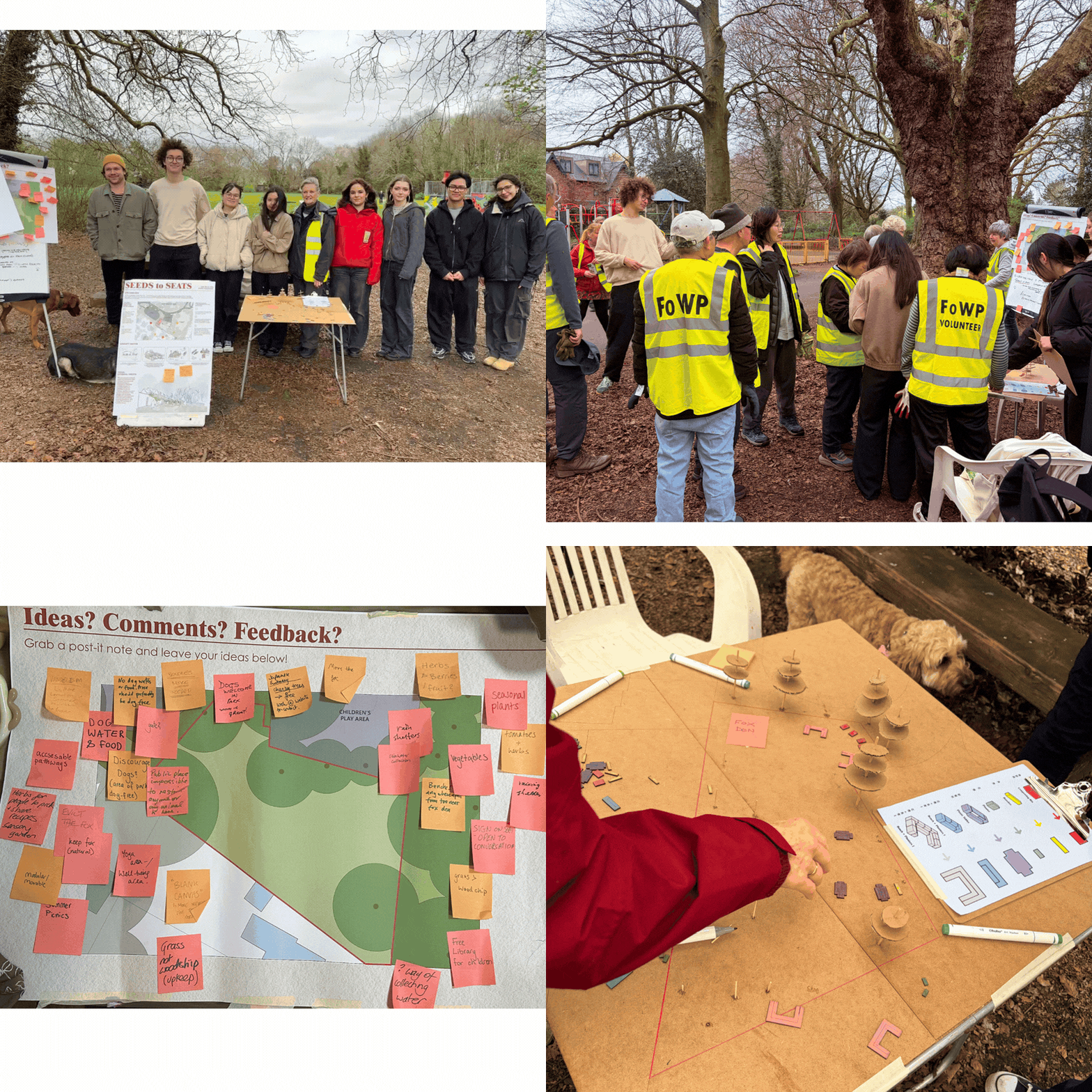
We arrived at Worthington Park at 9:30 to set up the tables and posters for our coffee morning and fix parts of the model which had broken on the way.
The morning was quiet at first, but after 11 it became busy with passerby and volunteers sharing strong opinions and raising important issues we hadn’t considered. A key debate was whether dogs should be allowed on site with some wanting a dog-free area and others feeling this would be impossible to enforce in a park. There were also discussions on whether it would be possible to build paths and shelter for the benches.
Finally our collaborators informed us that the fox den had to remain, so our focus should shift toward designing ways to coexist with the wildlife rather than relocating it.
After meeting with our collaborator we decided to split into the MA and BA students, letting the more experienced architects manage the ethics applications while the newer pupils experimented with laying out benches in a 1:100 print of the park. We focused on how to mask the compost smell utilise the pillars for shelter while the Master's students created a plan for our public consultation display.
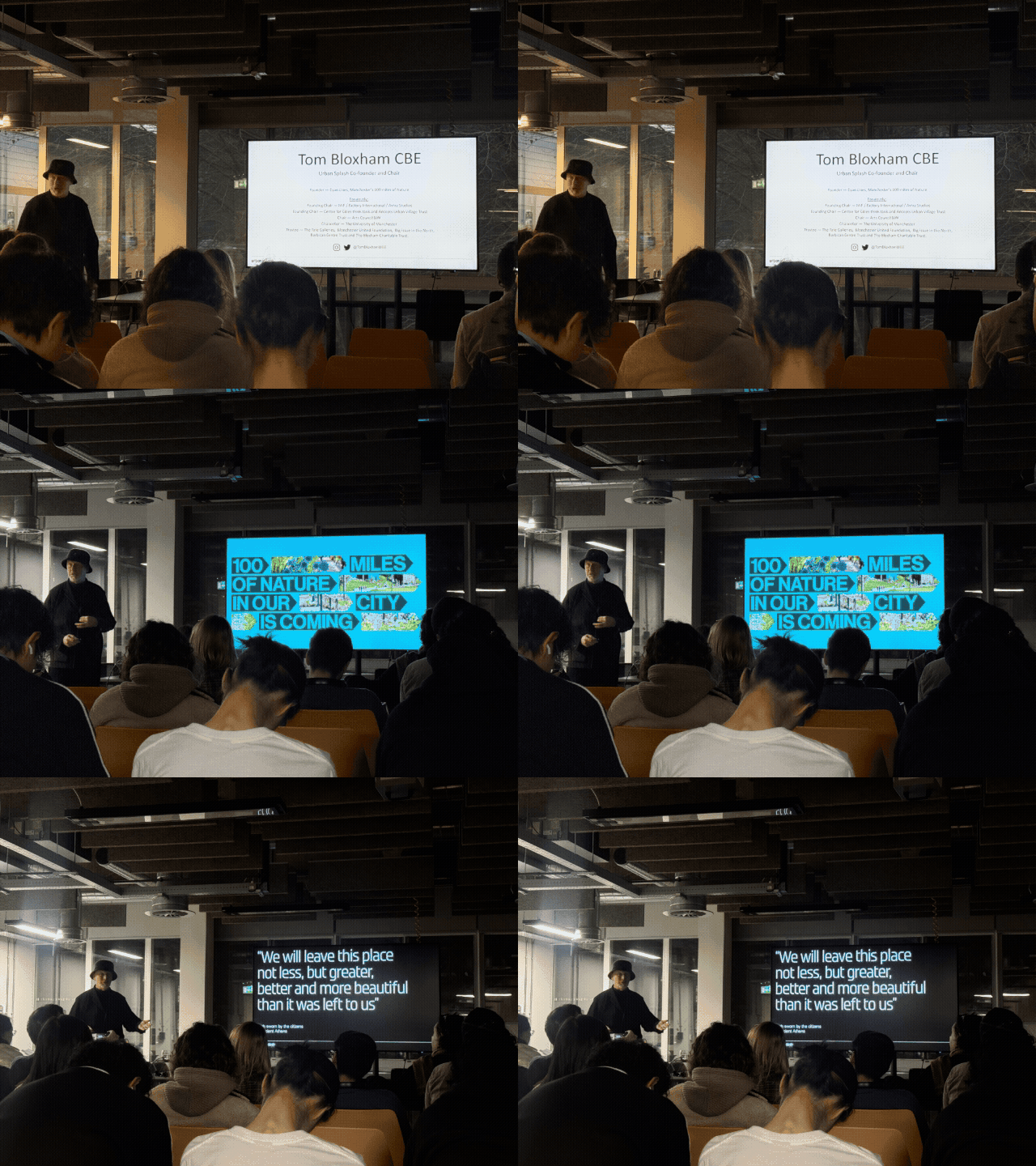
Talk from Tom Bloxton, founder of Cyanlines & Co-founder/chair of Urban Splash
Tom Bloxton, founder of CyanLines gave a talk to our students at MSA which one of our team-members attended. The talk gave us insight into the goals of CyanLines from the founder’s view, as well as the future of Manchester.
We discovered that most of CyanLines’ work focuses on restoring what is already there to uplift the city. His restorations are more zoomed into how the spaces made people feel and how to uplift the community, rather than on ‘quick fixes’. There is a drive to repurpose large buildings, factories and warehouses to make spaces for communities, e.g. a large space was rented for entrepreneurs to sell or use how they wish. Tom Bloxton tries to make spaces as interesting as possible to promote businesses, connect canals and turn around some areas in Manchester.
CyanLines was made to link what already exists in Manchester. More and more of the city is demolished for larger buildings, but why not connect what is already there?
Tom Bloxton sees a future where all of Manchester is connected, with a hundred miles of greenery.
In our second session together, we discussed and worked through our ethics agreement, risk assessment, and budget for the project. We discussed possible both ethical and physical risks and how to tackle them as a whole group. We then split into groups of three with each group filling in and submitting each form. All of our documents were approved!
My name is Minzheng Han and I am studying Architectural and adaptive reuse at Manchester School of Architecture. I graduated from China. My major is architecure.
I’m particularly interested in digital design and adaptive reuse, especially how computational tools can help us rethink and transform existing buildings.
I’m also really interested in the renovation of historic architecture — not just preserving it, but finding ways to adapt it to contemporary use while keeping its spatial and cultural value.
Hi, I’m Selin and I’m a BA1 Architecture student. I’m committed to creating and participating in environmentally conscious, forward-thinking, and adaptable projects. I’m excited to be a part of this MSA Live project which is a an amazing opportunity to connect and build community.
As part of our community engagement task, we visited Stockport to gather insights from local residents about arts, craft, and cultural opportunities in the area.
During the session, we spoke directly with members of the public, asking them what they would like to see introduced or improved in terms of cultural activities. This included suggestions for creative spaces, events, and community-led initiatives.
To make the process interactive and place-based, members of the public were also invited to mark locations on a map of Stockport. They placed pins on areas they felt would benefit from new cultural interventions. This helped us identify specific sites that the community perceives as underused, lacking cultural activity, or having strong potential for development.
Through this engagement, we gathered a range of ideas and perspectives, providing valuable insight into local needs and priorities. The combination of conversation and mapping allowed us to better understand not just what people want, but also where they feel change is most needed.
This week, we carried out our engagement activity with our collaborator! We came prepared with all three of our engagement activities ready to carry them out, and we held an interactive session in which we accompanied our collaborators through the activities to extract every bit of information we could for them. The information we gained during this session will be crucial for our design process, as we were able to clearly understand the collaborators' exact expectations and priorities for this project.
Throughout the activity, we understood the expectations of the collaborator in terms of design, functionality, materiality, community, and user experience. We will use this information during our design process to shape our design and curate an experience which satisfies the collaborator, the user, and us as the design team. We are really proud of our engagement activity, and we feel like the outcomes we obtained through this activity were successful beyond our expectations!
In our latest session, we initially focused on responding to feedback from our mentor regarding our ethics application. Revisiting our community engagement strategy, which we modified last week to suit our collaborator's needs, we clarified the exact details about our activity. By clearly explaining the three distinct phases, we ensured that we clearly communicated exactly what we wanted to do.
With the structure of the engagement activity determined and explained in good detail, we shifted our focus to a brainstorming session to generate the content for the engagement activity. A major focus was on creating a list of design drivers for the project. During the upcoming engagement, we plan to use this list as a tool, inviting our collaborators to highlight the drivers they feel are most important and applicable to our project. We finished the session by identifying the remaining content required to run the activity, leaving us with a clear plan for the week ahead.
We made the decision to create a 3D model during this session in order to better explain our concepts to our collaborator. In order to collect a variety of user viewpoints, we also created two distinct surveys, one for the building's staff and another for younger children. Alongside this, we developed preliminary sketches to further refine our proposal.
Task Division & Submission Preparation
We concentrated on organizing our work throughout this session in order to meet the deadline of March 9. The ethics application, project timetable, risk assessment, and budget were among the important areas where tasks were distributed such that each team member was in charge of a particular aspect.
In addition, we collaborated to improve our strategy, talk about important factors, and solidify our concepts, which enabled us to get the necessary documents ready for submission.
Description of the Project:
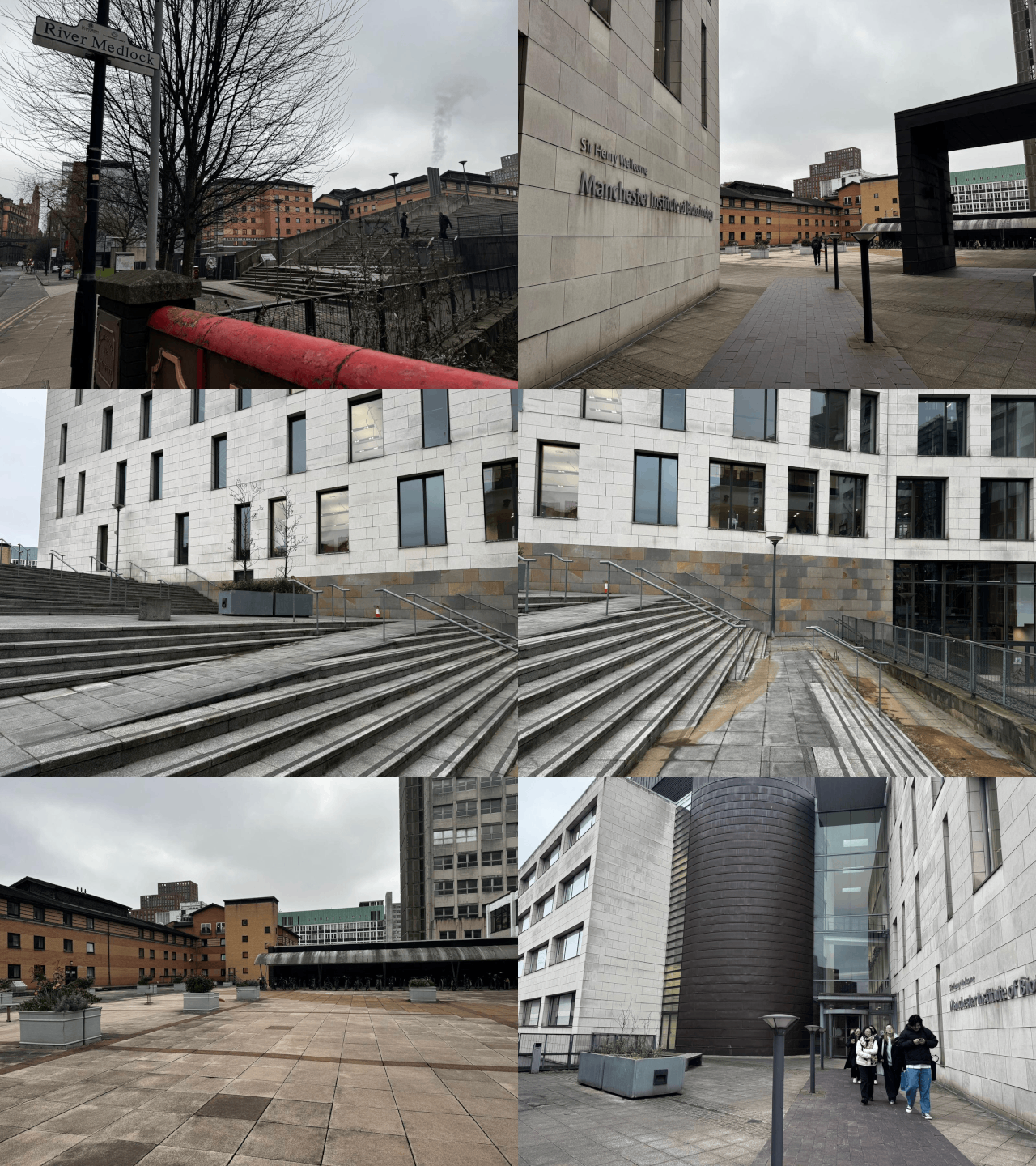
A proposed partnership between MSA Live Group 03 and the University of Manchester, Petri of Play aims to bring play, learning, community, and nature to the area around the Manchester Institute of Biotechnology.
The location is currently nestled away from the main road, which makes it seem isolated from its surroundings and leaves it open to damage. In response, the initiative aims to turn this neglected area into a welcoming and stimulating setting for individuals of all ages.
In addition to instructive and interactive displays that highlight the work of the Manchester Institute of Biotechnology, our concept calls for a space where people can sit, connect, and engage. Additionally, we want to work with a nearby elementary school to promote learning through experience by use play as a vehicle to discuss subjects like biodiversity and climate change.
In order to convey our vision and future course, we also decided on the name Petri of Play and created our first poster during this session.
We developed a series of questions for our UoM collaborating partner after our first group meeting and preliminary discussion of the brief. We learned more about their expectations and priorities for the project during our evening conversation with them.
We took advantage of this chance to consider several choices, evaluating them collectively and making notes to help orient our future actions. This discussion served to lay the groundwork for our future strategy.
This week marked our first engagement with the project site. The emphasis was on examining and comprehending the existing building and its mood rather than diving right into design.
We investigated the area for a while, focusing on the building's materials, lighting, and various perspectives. Contrasts in texture and structure, as well as the way natural light interacts with surfaces throughout the day, were the focus of early observations.
Site Visit
PART 3: Reflection
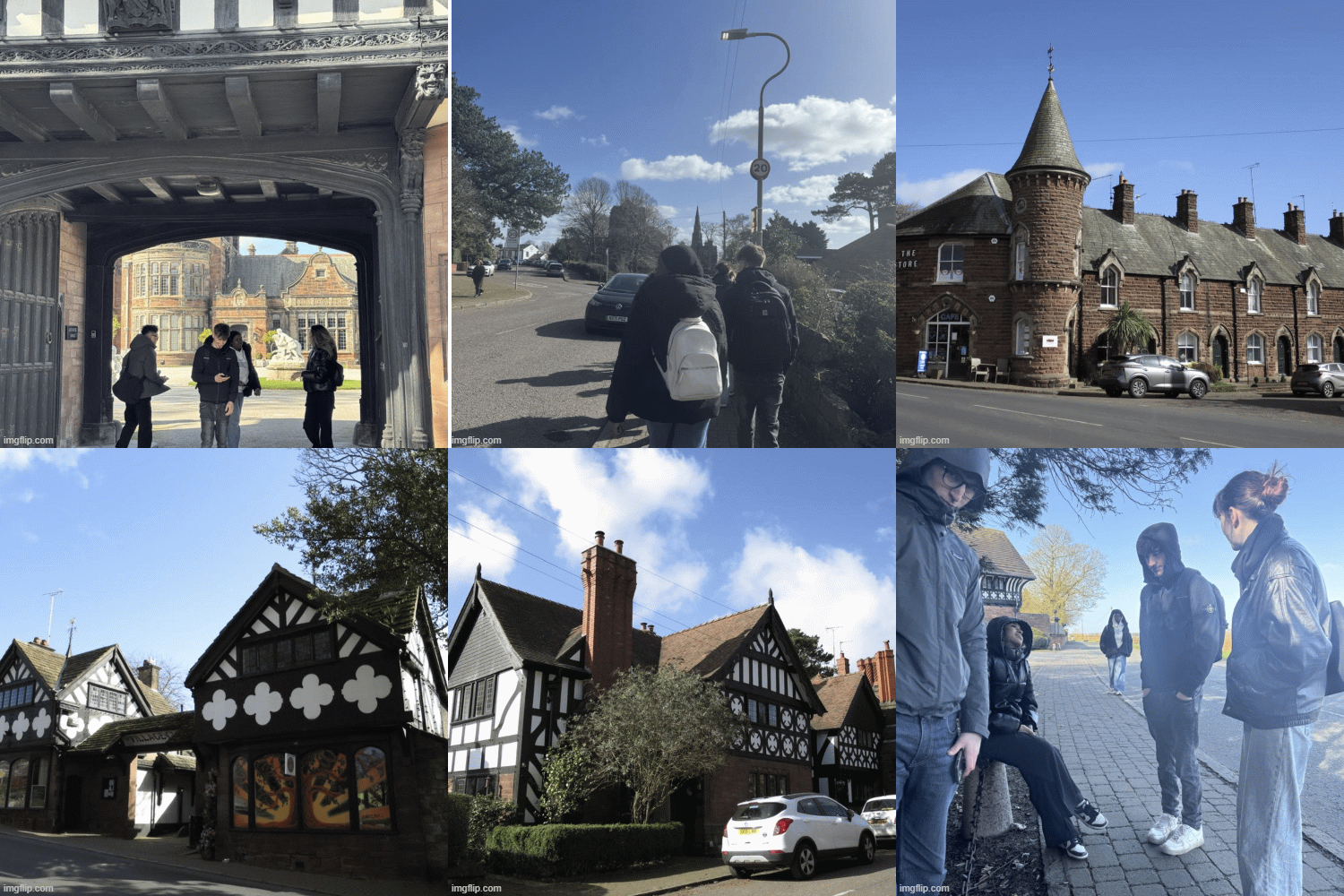
After many conversations, questions and steps, we sat and discussed the brief with our collaborators in further detail. They shared a lot of useful material including information about Burton Manor, a site which may ultimately serve as precedence. This reflective conversation also highlighted potential trade offs between designing spaces that generate revenue and more ethical considerations: how to design high-end properties without marginalizing certain demographics of people. It also emphasized the need to design spaces that meet council criteria and the importance of considering the needs of the local area during planning. We then decided to walk into town to get a sense of the local area, before finally heading back to base.
Site Visit
PART 2: Exploring the Grounds
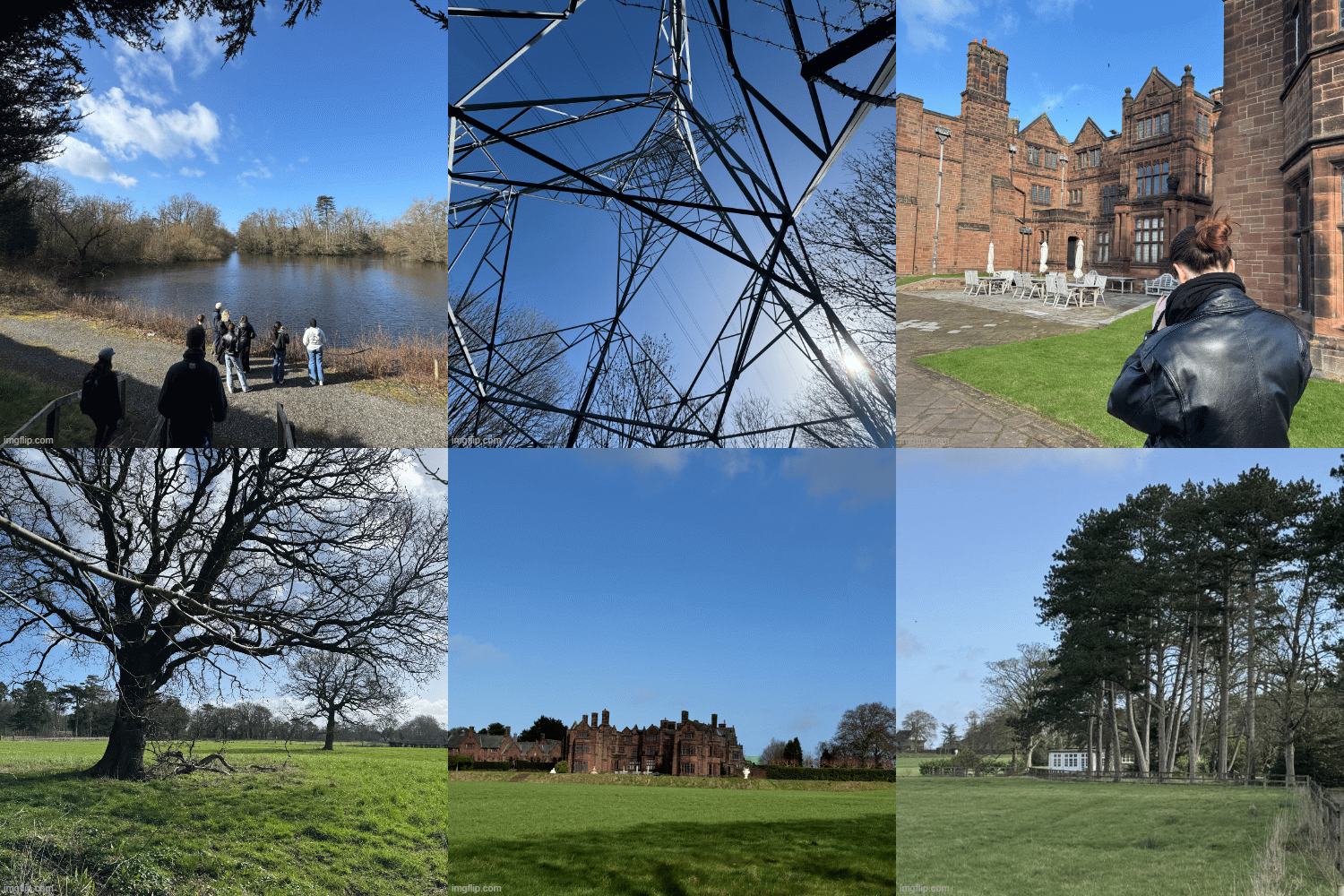
The next phase was touring key parts of the manor's grounds. This experience helped gauge the scale of the manor, particularly in comparison to its surrounding areas and key landmarks around the site that we may consider when during wider planning and when producing outputs. While doing also came across a few pylons on the site which sparked conversations about building regulations, particularly within the green belt and potential conflicts that may arise in doing so. Taking a tour of the grounds also allowed us to collate photographical material which will be essential when working outputs for our project.
Site Visit
PART 1 : Inside the Manor
After much planning and preparation, we finally visited Thornton Manor! The day started off by meeting with our collaborators and a necessary break after the long drive. We then dived straight into exploring the fire damage within the manor. As we had only ever seen this though media, this helped us contextualize the gravity of the damage and identify features within the manor that we could potentially incorporate in our design process to provide visual links. It was particularly interesting to identify older construction methods used within manor, comparing them with modern methods. Understanding the severity of the fire damage also helped to estimate the amount of housing units that would ultimately fund the manor's refurbishment.
16/04/2026
With 5 days until our workshop at the school, we went to the MTC to print all the things we would need for the activities. We printed 3 copies of everything for each of the classes and split them up so that we would have it ready on Tuesday.
17/03/2026
We spent this Tuesday preparing for the workshop and distributing responsibilities. We had to focus on how we would present the activities to the pupils and how it would be organized so that they complete the tasks and also find it enjoyable. We created a day plan and finalized everything so that we had everything ready for the workshop. We also decided on the day of the workshop with Laura and Helen and figured it would be most suitable for us to have it done on the 21st of April.
03/03/2026
We planned a visit to the school and we headed over there to discuss our plans with Laura and Helen. We decided on the activities we would come back and do with the students and looked at the materials we would need. We had a look around the school to understand the site and to see if we wanted to incorporate any elements we find around the school in our project. We also had the chance to have a peak inside the construction site where the extension of the school would be.
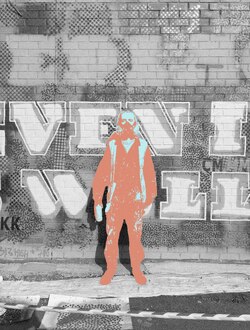
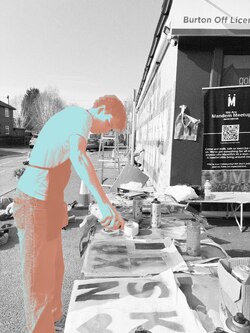
Alongside the tote-spraying workshop, the Withington Walls x Mandem Meetup event also featured a live mural created by Oskar “with a K.” Taking a short break from painting to pose for a photo, he spoke with Macie and Cian about his work after hearing about the MSA Live 2026 project. Oskar spoke warmly about the Baths and the surrounding community, reminiscing on his role in organising the 2024 Paint Jam held at the site.
Having already spent time admiring the murals in the external courtyard, it was especially valuable to hear the story behind them. The Paint Jam, he explained, was organised to celebrate and promote street art culture across Manchester.
The conversation also highlighted the Baths’ wider cultural and social significance. Inspired by the site's continued association to activism, the group reflected on the Bath's impact, from advancing gender integrated bathing, to the community protests from 2013-2015 to save the Baths.
A few weeks ago, group memebers Macie and Cian took part in the Mandem Meetup street party - a collaborative event organised by Withington Walls and the men’s mental health group Mandem Meetup, with funding from Manchester Local Care Organisation and support from Withington Baths. After coming across a social media post promoting the free event, the group became interested in learning more about Withington Walls, the grassroots street art collective behind the vibrant murals that bring colour to the walls of Withington Baths.
Macie and Cian were pleased to report that they had a great time immersing themselves in the tote-spraying workshop, representing MSA through their “FLUX” and “SKN” designs. Between chatting with local residents, learning more about the impactful work of Mandem Meetup, and enjoying some local Jamaican patties, the pair left with a deeper appreciation for the strong sense of community in the area and its celebration of creative expression.
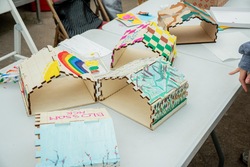
Yesterday, our group hosted a birdhouse model-making workshop at Blossom Charity. We began the session by showing the volunteers the plan of the space, and invited them to share their thoughts about the space by using coloured stickers and Post-it notes. It was nice to understand what they like about the space, what they want to improve, and what needs more attention.
After this feedback activity, we guided the volunteers on how to assemble the birdhouse by using the pre-cut wood pieces that had been prepared earlier in B15. We also provided them with some acrylic paints to decorate the birdhouse. Some beautifully painted cacti on it, while others decorated theirs with rainbows.
It was such a fun, hands-on workshop filled with laughter and meaningful engagement. So grateful to everyone who joined and contributed their energy! 💛🌱
This session aptly named *Printing Error* took place at the library, where we met to finalise plans for our engagement event at Brookfield Church. Despite the slightly chaotic title, things were actually very productive.
We reviewed a range of precedent images that we can show to the public, giving them something tangible to react to and helping us understand their preferences. Alongside that, we printed the church’s site plan (successfully, eventually), which will act as a key engagement tool, allowing people to physically point out where they think new facilities should be located.
We also mapped out a short presentation to clearly explain the project from start to finish keeping it simple and (hopefully) memorable.
On a more analytical side, we carried out a demographic study using local data. This helped us better understand the community we’ll be working with, and will also help us be more aware of whether the people engaging with us are truly representative of the wider area. Since we won’t have control over attendance, this adds an extra layer of insight and makes the whole process even more valuable as a learning experience.
All in all, a very productive session. We’ve prepped what we’re going to say, gathered all the materials we need, and are feeling ready (printing errors aside) for what’s next.
Today we headed to B.15 to review our physical models. We refined the designs, made a few adjustments, and gathered useful feedback while testing them ahead of this week’s workshop. Several improvements were made to ensure the models are easy to assemble and durable enough for the beards to use.
Safe to say, we’re feeling well prepared for the workshop and now we’re just hoping the sun shows up and blesses us with some Vitamin C on the day ☀️
With the Easter break underway, we held a hybrid meeting today over Teams to keep momentum going and start delegating tasks now that we have a clear design direction after our engagement activities. It was good to get everyone together to collaborate despite not all being in the same place.
Our main focus was dividing up the workload for the coming weeks. Tasks were split out across the group, with some members beginning to work up the site plan on AutoCAD, while others are starting to model key elements of the proposed design such as the new entrance and water fountain feature. Getting these aspects underway in parallel should mean we can bring everything together more efficiently as the design develops.
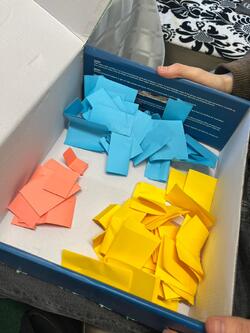
This weekend we went back to the site to collect the voting box and count the results. The turnout was better than what we had expected - 68 votes in total, with 31 Blue, 28 Yellow and 9 Pink, giving a clear majority in favour of the traditional theme.
It was great to see how many people had engaged with the display over the week. The result gives us a solid direction to take into the next phase of the design, and it's useful to know that the community's preference aligns with the existing character of the garden.
As we don't need the display board again just yet, we've left it on site to see if we pick up any extra votes before our next visit. In the meantime, we can start developing design concepts digital models with the traditional theme as our foundation.
Today we headed back to the site for our second visit, and luckily the sun was out which made the whole experience feel really positive and energetic!
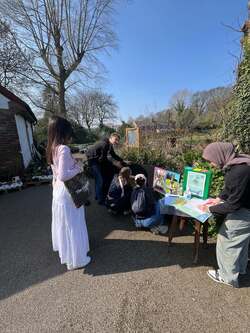
We set up our display board, pinning our precedent images across it, and placed our handmade voting box alongside it with our project poster and site plan to give context to visitors about what we are designing and why.
A few community members stopped to look through the precedents and ask questions about the project, which was encouraging and gave us some useful early impressions of what people are drawn to.
We will be leaving the voting box on site for the next week, giving volunteers and members of the Salford Croquet Club plenty of time to browse the options and cast their vote. We are looking forward to coming back next week to see the results and find out which design direction the community has chosen!
This week, we sorted through our collected fountain precedents and categorised them into two distinct themes: modern and traditional. Going through the images together on our Miro board and deciding which category each one fell into sparked a lot of discussion about what design language we want to bring to the site, and helped us narrow down the most relevant examples to present to the community.
To collect votes on site, we brought an old shoe box which we will cut into the top so visitors can post their chosen precedent in. Getting the voting materials ready felt like a real step forward, and we now have an efficient method for gathering community feedback that will directly shape the design of our water feature in the coming weeks!
Last couple of days before our groups engagement activity day. Discussing and agreeing on the activities to be carried out on the day and what is necessary to prepare beforehand (printing, model making etc). The proposed plan sets out 3 activities we hope to carry out at our stall prepared by the collaborators at the Market Hall. Each activity will allow us to engage with the contacts the collaborators has arranged to attend on the day. They will allow us to have a set of different outcomes that will help us with a proposed design and ideas moving forward.
We're set to meet on 09.04.2026 to prepare all PIS forms and consent forms, flyers, posters and activity sheets and models for the big day!
Group progression meeting - engagement activity workshop, discussing and delegating tasks to form a proposed plan for the collaborators to agree on. Following this meeting, members of the team developed ideas, questions and intended outcomes for the engagement activity.
We proposed the engagement day to be the 10th April at Glossop Market Hall, details to be ironed out with the collaborators in the following meetings with the team.
Towards the end of the day, our group gathered in a meeting room to brainstorm ideas for the proposed community space in St Nathaniel's Church in Wigan. We shared ideas on how the Church can be reimagined as a flexible and welcoming hub for the youth. Ideas ranged from a library or book swap corner to an arts and craft workshops later turned into exhibitions, roller skating, dance sessions, movie nights or even a sports hall. We also considered the possibility of using breakout rooms for skill learning workshops to connect generations, support those who are lonely and ultimately break barriers across the community.
Using our online survey, we hope to explore the outcomes of responses from students and stakeholders and how their feedback will shape the design direction.
This week we met up and drove to Monton Unitarian Church for a site visit. We were able to walk around the bowling green, taking in the surroundings, photos, and relevant measurements.
We then met up with our client, Reverend Anna, and presented the work and design we made so far. She liked the design as well as the precedents we used for it and had feedback about changes she would like to see: prioritising a fixed roof over fixed structure (better weather proofing), feedback on size & location of structure on the site, and overall feedback on expectations.
Overall we enjoyed the site visit as well as Anna’s feedback very much, and found it very valuable. We established some next steps, and discussed the feasibility & budget of the project. As it is ambitious with the given budget, we might have difficulties to see the project to construction within the time given. Therefore we mentioned the possibility to work towards a finished design & fundraising for next year’s group (or potential different adaptive reuse projects).
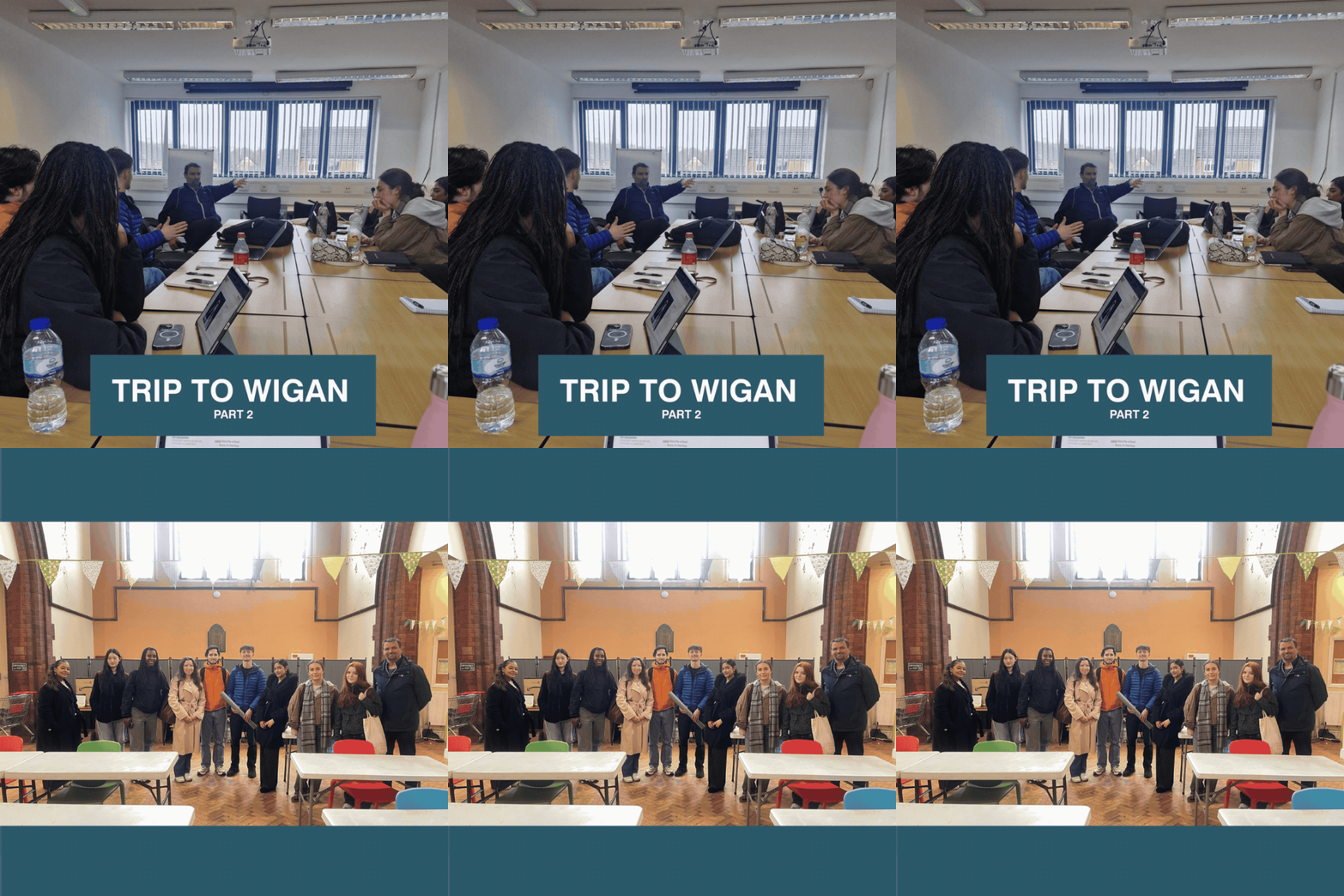
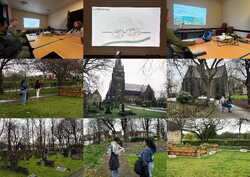
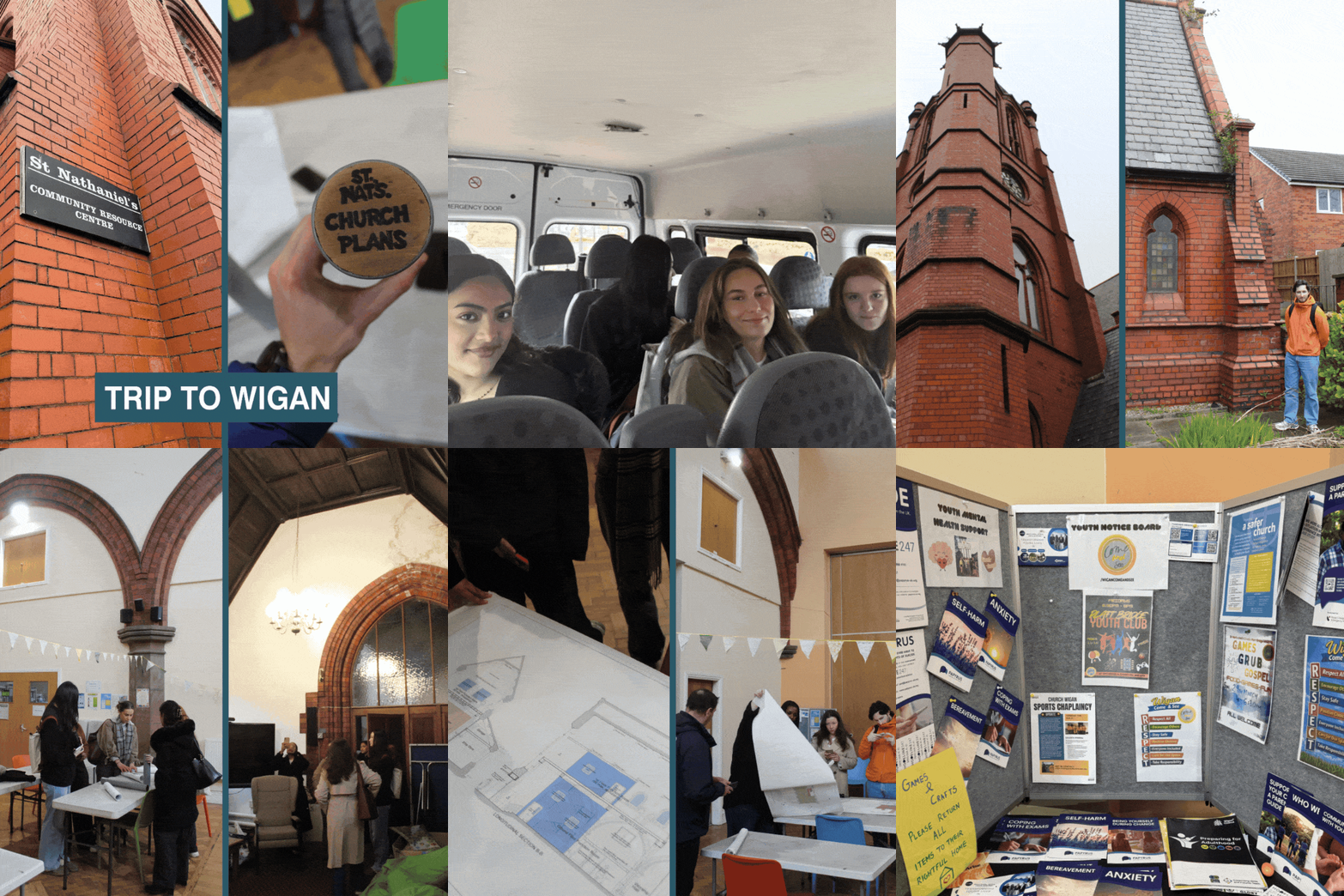
Trip to Wigan- PART 1
Future of St Nathaniel's Church- 31/03/26
Our visit began with a discussion with our collaborator, David, who gave us more insight into Wigan's neighbourhood context as well as the value of bettering the community for the future. We then headed to St Nathaniel's Church where we were met with Lisa, a member of the Church community who shared invaluable insight into the realities of running activities on the site today. Several challenges were mentioned including: multiple entrances making supervision difficult, potential fire safety concerns with locked doors, teenagers sometimes arriving on e-scooters, raising safety and behavioural issues, antisocial behaviour and security being an ongoing concern and many families connected to the church facing complex social challenges including substance misuse issues affecting parents.
This conversation stood as a reminder that designing a youth space isn't just about architecture but about understanding people, safe guarding and creating an environment that supports community needs. With that in mind, we reviewed architectural plans, analysing how the building's existing layout could evolve into a space for different users and age groups. Some practical ideas discussed included: flexible hall with fold-away chairs, dividing walls to allow activities to run simultaneously, dedicated storage areas and improved circulation and clearer supervision zones.
Having observed the rooms within the Church and its interior and exterior make-up, it was time to propose our concept and ideas to deputy headteacher of Platt Bridge Community School, Carly. We shared initial thoughts on how the space could evolve into a flexible youth centre whilst also listening to how the school currently supports its students beyond the classroom. Having spoken to the community and spent time understanding the site, our next step entails exploration into potential spaces for the community.
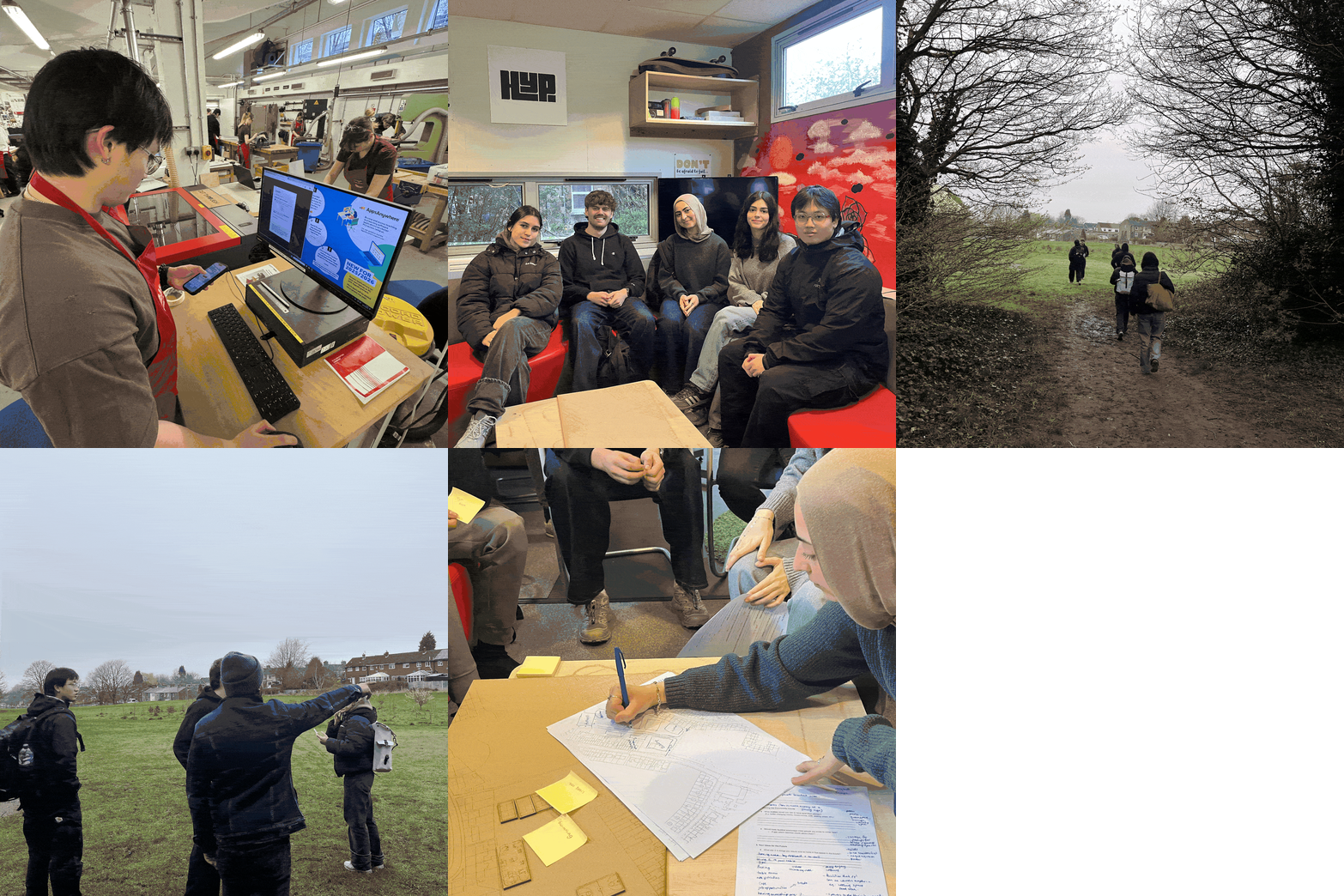
In Session 4, we visited the HYP Youth Centre in Hyde, Manchester, where we delivered an engagement workshop with the children to better understand their wants and needs for the final project.
Prior to the session, we prepared a series of activities to support this process. These included a questionnaire, a drawing activity, and an interactive mapping exercise using a laser-cut site model with movable pieces to encourage participation, spark conversation, and help the children express their ideas in an accessible and creative way.
We also ensured that all ethical requirements were met in advance of the workshop. This included obtaining the necessary approvals and carrying out risk assessments.
After introducing ourselves to the children and vice versa, enthusiastic discussions developed and ideas began to be shared about how their youth centre could evolve. They confidently expressed their aspirations for the space, describing how they would like it to look, feel, and function which helped us understand how to design for both themselves and future users.
The activities and discussions not only provided valuable insight for the project but also sparked a wider interest in architecture as a potential career, encouraging the children to think about their own future aspirations and possibilities.
Finally, we visited the site in order to understand how the space looks in reality, explore current conditions and begin the design process.
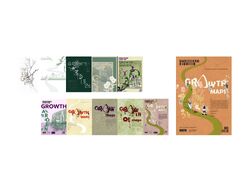
We arrived with various ideas and iterations before gathering for thought exchanges. This collage illustrates the thought process we went through before arriving at the final poster!
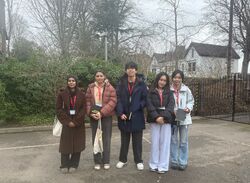
Following our meeting with the collaborator, we visited the site during school lunchtime. Greeted by Mr. Smith and the representatives from the student bodies, we explored the school and its facilities, which included the grass pitch and mud playground.
Suggested by the student body, logs on the front grass should be secured into the ground for safety, and more plantations are needed for biodiversity. The parking area also requires reorientation to improve mobility and multifunctionality. Staff suggested an outdoor reading area and extra spaces for kids to be physically involved, installed roofs on benches for rain coverage, and a proper storage room for tricycles.
Summarising the demands, following the school’s values, we would like to incorporate designs where students take the initiative to explore and discover what is around them. We hope to encourage sustainable development in a manner that fosters pupils’ wellbeing, environmental awareness, and experiential learning across the curriculum.
We took pictures, measurements, and sketches, recording the potentials of the landscape and design ideas catering to users’ needs. Also, we had some great conversations with the students and staff. The day ended with us summarising our findings and sharing our observations in the library. Just cannot wait to see how we bring our final design to life!
We started off with research to gather inspirations to develop our design.We also layered our plan and budgets along with safety considerations that had to be considered and well planned before our interaction with the children in the school. Our initial aim was to visit the school and conduct our activities on the following Monday but due to various reasons we decided with our tutor to postpone the action for more preparation. It cleared our minds by highlighting the key stages in our projected timeline. This allows us to track our progress and work efficiently. Our day ends with our continuous exploration of design ideas.
The day focused primarily on refining our project's visual direction and establishing clear next steps for the March outputs (Project timeline, Ethics application, Risk assessment, and Budget). With previous feedback, we opened the session by presenting our latest poster and sharing reflections from our recent site visit with our tutor, which offered us fresh perspectives to refine our design. The key decision was to shift our background palette to a more vibrant orange from pink, followed by minor adjustments to typography and element and graphical illustration placement. This choice was driven by a desire to create stronger visual contrast and balance while conceptually echoing the kids' playfulness and the earthy essence of mud. We also divided responsibilities following the review: Qistina and Anagha on the poster, Sylvia on site research, and the rest continuing conceptual development and organizing existing resources. Most importantly, we maintained a collaborative atmosphere to advance our proposals and get the most out of them.
Day 1 - Meeting the Committees and the Collaborator
We started off the day with some fun icebreakers to get to know each other. It was nice to see everyone sharing their interests and stories. We then moved on to developing our goals with the focus on two core concepts of “biodiversity” and “community”. We decided to name our project the “Growth Maps”.
It was also exciting to meet Mr. Andy Smith, our collaborator, the head of Moor Allerton Preparatory School, for the first time! We discussed and exchanged thoughts and ideas for the design project and assigned roles. What an eventful start!
Finalising Design Directions & Preparing for the Site Meeting
17 March 2026
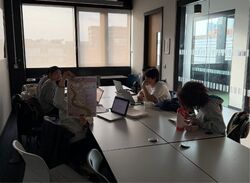
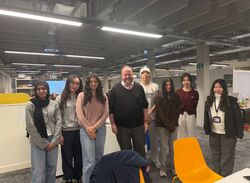
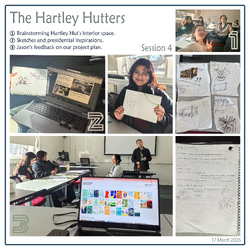
In our fourth group session, we focused on consolidating design ideas and planning for the upcoming site meeting on 31 March. The team engaged in detailed brainstorming on the interior spaces of the Hartley Huts, reviewed initial sketches and material studies, and incorporated structured feedback on our project plan from our tutor Jason.
To prepare for the client presentation, we have outlined the following deliverables and divided tasks accordingly. BA1 and Foundation students will take the lead in developing material studies, ramp proposals, and an indicative site plan that highlights key interventions—including the volunteer hub, heritage display hut, bridge upgrades, accessible ramp, seating areas, and seasonal event features.
The goal is to communicate our design intent clearly and gather valuable feedback, which will help us refine the proposals in the coming weeks leading to the final presentation.
We are all set for an insightful client meeting and look forward to sharing our progress!
Site Visit to Albert Dock, Liverpool
3 March 2026
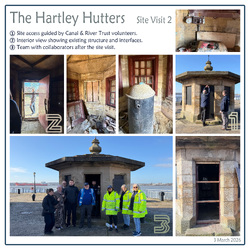
The site visit offered a rare and valuable opportunity to access the Hartley Huts, a Grade II listed heritage structure, which significantly deepened our understanding of the project. Being able to enter the structures allowed us to experience its spatial and material qualities firsthand, beyond what drawings or photographs could convey.
The visit was highly productive, as it sparked a wide range of new ideas and directions for our design. Observing the existing conditions, structure, and atmosphere helped clarify both the potentials and constraints of working within a heritage context. It also made us more aware of the sensitivity required when intervening in such a historically significant site.
Engaging with our collaborators, particularly Canal & River Trust volunteers and Architect Richard Banks, provided valuable professional insight. Conversations with both the architects and the volunteers enriched our understanding of the site’s history, ongoing use, and community value.
Overall, the experience has been extremely helpful in shaping our design approach. It reinforced the importance of on-site engagement and collaboration, and it will directly inform more grounded, context-sensitive proposals moving forward.
This afternoon, we had a Teams call with our collaborator, Steve. We discussed outputs and had a conversation about the structure of the festival day. It was really useful to stay in touch, not only as a team, but also to ensure that Steve understands the creative direction we’re moving in and remains involved every step of the way.
For our engagement session, once preparation was complete and despite all the hail, the engagement team managed to travel to our site. Our activities surrounded 2 primary questions about the area; the first was a post-it note pin-up board with the question being “what challenges do you [the clientele] face when coming [to the site].” This allowed the public to write their own opinions on the matter, giving us information on what the public thought could improve the area. The engagement for this was good, but contributions were more related towards access, such as car parks and paths, as well as events the leisure centre hosts. However, the second engagement activity was much more successful; we printed out a cartoon map of our selected area alongside various fun models of potential outdoor appliances with the intention being that the participating public could create their own ideal outdoor space. This was placed alongside the question “What would your perfect outdoor space look like?” This activity gave us a range of different responses across all ages; the younger audience preferred a playground area, including slides and climbing frames. Some of the older members agreed with this, including seating areas to watch their kids and to relax after the gym, whereas some just preferred a nice seating area with a lot of greenery which we noticed was absent in the surrounding area, a place to have a picnic for example after the gym. A common theme was not to include outdoor gym equipment, as a lot of the members were content with all the equipment in the gym. Overall, this engagement activity gave us a variety of useful opinions on what the site needs and how we can please all members of the leisure centre.
Session 6: Collaborator Meeting and Workshop Planning
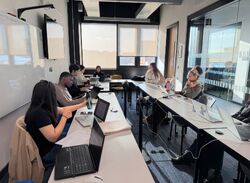
This week’s session focused on our meeting with the collaborator and on clarifying how the upcoming workshop should be structured. It was a useful discussion that helped us move from vague ideas towards something more organised and realistic.
A key part of the conversation was about participation. While the ideal number would be around fifteen people, we discussed that the main requirement from the university’s point of view is to have at least eight participants over the age of eighteen. This brought ethics and safeguarding into the discussion, especially around how information will be collected, explained, and stored safely. It was a reminder that community engagement is not only about generating ideas, but also about making sure the process is responsible and well managed.
We also talked through how we want to present our ideas during the workshop. Rather than arriving with a fixed proposal, we agreed that it would be better to keep things open and allow participants to shape the direction of the project. Floor plans, site images and precedent references were suggested as useful tools to help people visualise possibilities and respond more easily. We also discussed print formats and how large the plans should be, thinking about how people could interact with them through stickers, notes or annotations.
One of the most interesting parts of the discussion was around the actual purpose of the space. Although the project is connected to a church setting, the conversation raised the possibility that the final outcome may be more community-focused than strictly religious. This felt important, as it showed that the brief is still developing and that the workshop will play a real role in defining what the project becomes.
By the end of the session, tasks were becoming clearer. Images and screenshots from the meeting were being shared, a written summary was planned, and responsibilities for the blog post and follow-up were assigned. Overall, this meeting helped us feel more prepared and more aligned as a group.
A productive and necessary step forward. Less about final answers, more about setting up the right questions.