Name: Pauline Joyce M. Alviz
Course: M.Arch 1
Atelier: &Architecture

After completing my undergraduate degree at Manchester School of Architecture, I spent my Part 1 in London, where I worked on a healthcare project in Jersey. Being part of a larger team helped me understand how complex projects come together, balancing technical input, programme demands, and design quality, while keeping the people using the building in mind.

However, I’m also keen on taking on small-scale, community-led work. I enjoy projects where working closely with others shapes the design, and where decisions can be made quickly and thoughtfully in response to everyday needs. I am keen on roles that value this approach, projects that might be modest in scale, but have a major impact, because they allow architecture to feel grounded, practical, and connected to the communities it serves.
Posted 20 Feb 2026 12:59
Week 2 - 17/02/2026

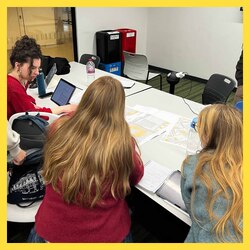
This week focused on research and analysis. With three major school sites to consider, we divided into three groups so we could investigate each location thoroughly and efficiently. Our main aim was to understand the character of each site, identifying its potential as well as its weaknesses and constraints.

Because the project centres on roads and access, we paid close attention to how movement currently works in and around each site. This included reviewing traffic patterns and congestion points, mapping pedestrian routes and crossing behaviour, and noting where conflicts occur between vehicles and people. We also considered the wider impact of any potential road closures, looking at who would be affected and how—such as students and parents during drop-off and pick-up times, local residents, public transport users, emergency services, and nearby businesses.

In addition, we explored a range of possible road-based interventions, considering both temporary measures (such as timed closures, cones/barriers, signage, and stewarding) and longer-term, permanent changes (such as revised junction layouts, traffic calming, widened pavements, improved crossings, and reconfigured drop-off zones). We will need to communicate and illustrate these options clearly to our collaborator, showing how each intervention could work in practice and what impacts it may have on circulation and safety.
By the end of the week, we had a clearer picture of how each site functions day-to-day and the key challenges that would need to be addressed. This research sets a strong foundation for developing informed proposals that improve safety, accessibility, and overall circulation without creating unintended disruption to the surrounding area.
Posted 3 Mar 2026 16:02