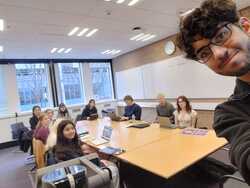
Hi! I'm Yiding, a postgraduate student in Architecture at MSA, with a deep focus on adaptive reuse. I am passionate about reimagining existing structures to meet modern needs while preserving their heritage. I am excited to explore innovative strategies in material reuse, structural retrofitting, and community engagement. I am particularly drawn to the Dens of Discovery project, as it aligns with my passion for transforming underused spaces into vibrant, inclusive environments that foster connection and education. I look forward to collaborating with the team to create spaces that honor the past and build a sustainable future.
Posted 3 Mar 2026 13:51
SESSION 02: DIVING INTO DETAILS
Building on the momentum of our first successful meeting, the team reconvened for Session 2, ready to translate our collective vision into actionable steps. The day began with a clear focus: to structure our work and deepen our understanding of the project’s core challenges.
We started by formalising our team structure, splitting into four specialised groups, each led by a Masters student and capped at three members. This intentional division of labour was designed to ensure we could dive deep into our respective areas while maintaining a cohesive project trajectory. The groups were formed around our individual interests and expertise:
Group 1 (Research/Physical Model Team): Focused on materials research and feasibility studies.
Group 2 (Concept Design/Physical Model Team): Tasked with testing den form ideas and conducting precedent analysis.
Group 3 (Planning Drawings Team): Investigating the potential functions of the dens and how they could extend into the wider site.
Group 4 (Digital Model Team): Also exploring the potential uses of the dens within the broader site context, complementing Group 3’s work.
Each group was assigned clear deliverables to bring to our next session, ensuring we all had a tangible focus for our work in the coming weeks.
A key highlight of the meeting was the detailed planning for our upcoming site visit, scheduled for Wednesday, 4th March 2026. We finalised travel arrangements, with the team set to travel from Manchester Piccadilly to Chelford by train, and discussed the logistics of our visit, including the remaining project budget. Additionally, we identified a smaller team to lead a community engagement site visit, with further details to be confirmed.
We also addressed critical project administration, assigning key responsibilities for deliverables due on the 6th of March: a Risk Assessment, Ethics Application, and Project Timeline.
The afternoon was dedicated to a rich discussion on community engagement. We brainstormed survey questions for the residents of Chelford, focusing on their daily habits, recycling practices, and relationship with wildlife. This led to exciting potential design outcomes, such as using recycled materials like Ecobricks in construction, creating structures that support local species, and involving the community in building the dens over time. We also discussed engaging with local businesses for waste materials and schools for educational workshops, turning the project into a community-driven initiative.
Overall, Session 2 was a day of clear direction and productive collaboration. We left the meeting with a solid plan, assigned tasks, and a renewed sense of purpose. As we move forward, we are excited to conduct our site visit, engage with the local community, and continue building the foundations of our project.