
Hi everyone,

I'm Damla, a 5th year Masters student in the &Architecture atelier. I completed my undergraduate degree here at MSA too, where I became interested in user-centred design. I'm excited to continue developing my interest and creative thinking through this MSA Live project, working with the Growing Togetherness Community Garden
Posted 10 Feb 2026 11:23
03/02/2026

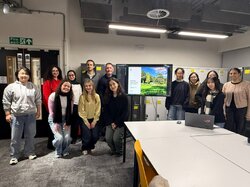
Hello! We are Group 15, collaborating with Growing Togetherness CIC to develop a low-tech water harvesting and storage strategy within their allotment space at Seedley Pavilion Café and Gardens.
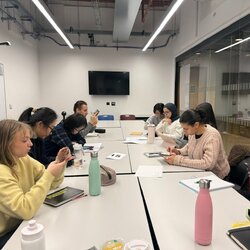
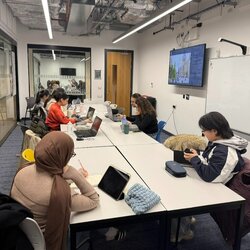
We began our first session with an introductory icebreaker, which gave us the opportunity to understand each other’s backgrounds, interests and architectural strengths that could contribute to the project. This helped establish how we might distribute roles and responsibilities moving forward.
We then played an interactive round of ‘Would You Rather?’ which allowed us to identify both soft and technical skills within the group. The exercise helped clarify who might take the lead in areas such as communication, graphic production, research and coordination.
Overall, the session set a productive foundation for the weeks ahead. We are looking forward to working collaboratively with Growing Togetherness CIC and exploring practical, low-tech strategies that can meaningfully support the Seedley Pavilion Gardens.
Posted 3 Mar 2026 14:16
03/02/2026

Following our initial icebreaker session, we had a brief meeting with the Director of Growing Togetherness CIC, Mark Frith. The discussion helped clarify what he is expecting from us, particularly in terms of developing a second entrance to the garden which promotes better circulation to the allotment space. We asked the questions we had prepared about site conditions, outputs and constraints, which helped narrow the scope of the project and gave us clearer direction moving forward. After the meeting, we created a group chat with Mark and our group members to organise communication and ensure we stay coordinated as the project progresses. Although short, the meeting was useful in confirming expectations and setting a focused starting point for the next stage.
Posted 3 Mar 2026 14:19
08/02/2026

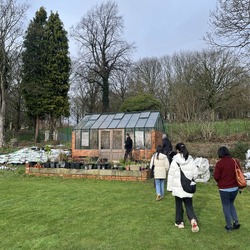
This week we visited the site with Mark to see the space first-hand. We started by looking through a collection of old postcards from throughout the park’s history, which gave us a sense of how the space has changed over time and how it has been used by the community.
Mark then walked us around the gardens, explaining the different planting areas and the types of vegetation being grown. He spoke about their experimental approach to growing in response to the UK climate, and how they are constantly testing what works best in changing conditions.
He also talked about the main entrance and the wider improvements happening around the park. After gaining permission, works have been carried out to improve access and increase footfall, helping make the space more visible and welcoming to the community.
Overall, the visit made the project feel more grounded and helped us better understand the environmental and social context we’re working within.
Posted 3 Mar 2026 14:25
10/02/2026

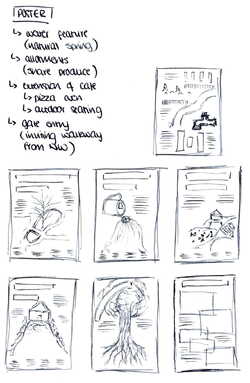
This week we had an informal meet-up to brainstorm ideas for our project poster. As a group made up of BA1, MArch1 and MLA1 students, we had to plan around different timetables and studio commitments, so the session was arranged independently to make sure everyone could contribute.
We started with quick, rough sketches to test possible layouts and think about how to clearly communicate our water harvesting strategy without overcomplicating it. During the session, we also agreed on our group name, Seed to Source, which reflects the journey of water through the site, from collection and storage to supporting growth within the gardens. Establishing the name helped give the poster a clearer direction and identity.
Posted 3 Mar 2026 14:26
17/02/2026

For our second official meeting, we focused on the more practical aspects of the project. We began drafting a risk assessment sheet, identifying potential hazards on site and considering how our proposed interventions could be implemented safely. This helped us think more realistically about working within an active garden environment.
We also developed an initial project timeline and a rough budget proposal to outline key stages and estimate material costs. Breaking the project down into phases made the scope feel more manageable and highlighted where further research is needed.
Alongside this, we finalised the poster design, incorporating feedback from our earlier sketches, and uploaded the completed version. This week felt more structured and task-oriented, allowing us to move from ideas into clearer planning and delivery.
Posted 3 Mar 2026 14:30