3/2/26

SESSION 1: INTRODUCTION

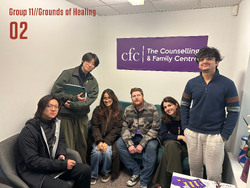
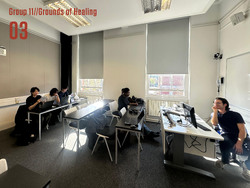
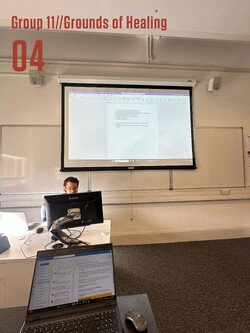
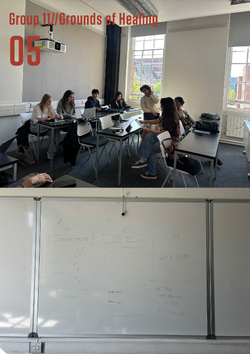
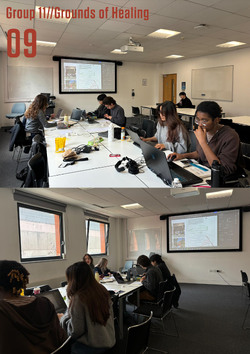
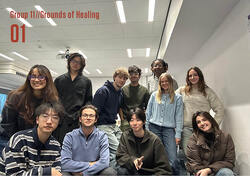
Today we had our first meeting as a group getting to know each other and where our journeys have taken us so far. Each of us have varied backgrounds and are at different points in life which was useful in seeing what our skills are best adapted to. We made sure to get everyone involved in design ideas for our initial task of producing a poster for our project, which was very successful combining multiple ideas into one.

Before meeting with our collaborator Mark Busby who works in The Counselling and Family Centre, we wanted to have an aim on what we would ask him to get a better understanding of the purpose in redesigning the café is. Having this information going forward will help us move forward with concepts for a poster and later ideas for the design of the café itself.

We hope to plan a site visit within the next week, meeting with Mark again and getting a sense for the building and what could come from this. For later tasks in the project, we hope to join together again to create some amazing work as a team.
Posted 19 Feb 2026 15:25
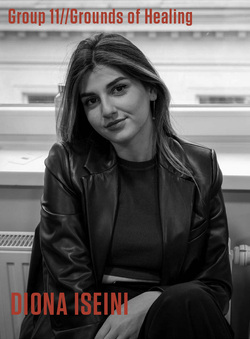
Hi, I’m Diona, currently in my first year of the MArch, having graduated from Manchester School of Architecture in 2025. I grew up as an Albanian in North Macedonia before moving to Manchester for my undergraduate studies, which shaped my interest in how architecture carries history, identity, and cultural memory across different places. During my third year, I completed work experience in a conservation practice, which strengthened my focus on adaptive reuse, historic building repair, and conservation-led design.
Outside of architecture, I enjoy travelling, photography, and sketching the places I visit (and eating lots and lots of good food), as these experiences influence how I observe buildings, streets, and everyday urban life. I’m really looking forward to working with the team and developing ideas together through the project.
Posted 19 Feb 2026 16:22
17/2/26

SESSION 2: SITE VISIT

Today we had our second meeting as a group, where we visited the site in Altrincham and were hosted by our collaborator Mark. During the morning, we were introduced to what the Counselling and Family Centre stands for and the values they promote. We were given a tour of the building, had the opportunity to meet some of the staff, and gained insight into what makes the space meaningful to those who use it.

Following this, we gathered in the community area, which is the focus of our design project, and discussed the needs of the collaborator and what he hopes to achieve from this redesign. As a group, we began to brainstorm ideas around how the space could be improved, considering aspects such as facilities, potential funding, and how the space could better support its users. We agreed to begin producing renders and plans that could be useful for Mark moving forward, as well as exploring the possibility of running workshops to engage with the community and better understand the different groups using the space.

After the meeting, we carried out initial site measurements to support our next steps. This visit marked an important shift in our project, as it provided us with a clearer direction and a stronger understanding of how to move forward as a team.
Posted 18 Mar 2026 12:22
3/3/26

SESSION 3: GROUP PROGRESS AND PLANNING

During this session, we were tasked with completing our risk assessment, budget proposal, and project proposal. As a group, we discussed how our project would develop over time, carefully planning a timeline that would allow us to make the most of the work ahead.

We identified two key groups from the list provided by our collaborator that we would engage with for the upcoming workshops, ensuring that our approach is both relevant and inclusive. Alongside this, we began outlining a budget plan based on the resources and materials we anticipate needing. We also had a discussion with our tutor to better understand the purpose of the risk assessment and how we could minimise potential risks during site visits and throughout the project.

In addition, we started working on our Ethos application, considering how our project aligns with broader values and responsibilities. As a group, we had an open conversation about what is important to us within this project, reflecting on how we are distributing roles, whether any adjustments are needed, and what we each hope to gain from the experience moving forward.
Posted 18 Mar 2026 12:31
17/3/26

SESSION 4: WORKSHOP PLANNING

Today, we had our last session pre-Easter Break. After submitting our risk assessment, ethics application, budget, and timeline, we came together as a group to reflect on the progress we have made so far. This gave us the opportunity to step back and evaluate how our project is developing, as well as how we are working collectively as a team.
We began planning for our community engagement workshops. We discussed potential approaches, the groups we aim to involve, and how these sessions could inform our design decisions. Having this conversation at this stage allowed us to be more intentional with our engagement and ensures that our project remains grounded in the needs of the community.
Posted 24 Apr 2026 15:38
21/4/26

SESSION 5: WORKSHOP PREPARATION

Today, during the first half of the session, we reviewed the publication document and discussed the upcoming submission. We reflected on our overall progress and assessed whether we are on track with our timeline, identifying any areas that may need more focus moving forward.
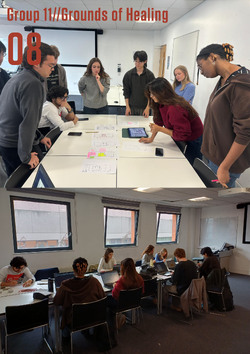
In the second half, we developed a fully revised plan for the workshop taking place on Friday. We discussed what we want to learn from the community and which questions are most important to ask. A key part of this conversation was considering how to make the workshop accessible to people without an architectural background, focusing on making it more tactile, interactive, and creative.
Following this, we compiled a list of materials and stationery required for the workshop and began organising the practical aspects, including the commute and overall logistics. This helped ensure that we are well-prepared and that the workshop can run smoothly.
Posted 24 Apr 2026 16:20
22/4/26

SESSION 6: WORKSHOP PREPARATION & MATERIAL SETUP

Today, following our workshop preparation from the previous day, we met to source the tools and stationery needed to bring the session together. This helped ensure we had everything required to run the workshop effectively and without interruption.
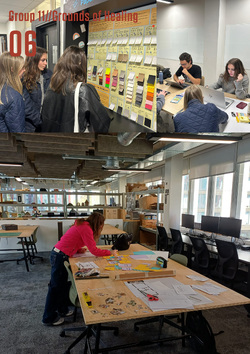
Afterwards, we made our way to MTC to prepare the materials. We hand-drew three sets of plans and created coloured cut-outs representing key spaces such as the WC, cafeteria, and workshop areas, allowing participants to rearrange them according to their preferences. In addition, we prepared a feedback sheet where participants could note what they like, dislike, and any improvements they would like to see.
We also developed an interactive exercise focused on interior colour palettes, offering a selection of options that participants could respond to using coloured sticky dots to indicate their preferences. This approach aimed to make the session more accessible, engaging, and easy to participate in regardless of background.
To ensure everything runs smoothly, we agreed to arrive at 9am the following day to set up ahead of the workshop, which is scheduled to begin at 10am with the group organised through our client.
Posted 27 Apr 2026 12:45
24/4/26

SESSION 7: ENGAGING THE COMMUNITY: WORKSHOP AT THE CFC

Having arranged with Mark and Lawrence to turn up to the Counselling and Family Centre at 10am, three of us, Taecho, Sofia and Nicolas, met up at the MTC just before 9am to pick up some of the equipment we would need and headed to the tram stop at St Peter’s. The tram ride was exciting - two of us had never been to the CFC before, or to Altrincham at all. Once we arrived, a short walk brought us to the building where we met up with Libby - who had driven instead, which made more sense for her living at home in Stockport. We made our way in slightly ahead of schedule, signed it at the reception and sat down in the cafe to prepare for the upcoming engagement activity.
We had with us 2 large A2 sheets which we had prepared in advance - one with options for potential colour palettes for the interior, and the other with a likes/dislikes and improvements column - as well as several printouts of a plan view of the CFC’s cafe and common room and cutouts of rooms within it, as well as with cutouts of furniture. While we were confident this would be easy to understand, and, ultimately, fun, we had to find a way to present this in an understandable way. Handily, we were given permission to use a large whiteboard that was standing in the cafe against the wall - so we stuck everything on, and, after some deliberation by means of having breakfast and a coffee, were ready to go.
The first two people we asked before going into the common room were two guys who worked at the CFC. They reacted extremely positively to the tasks and were very happy to take part and answer our questions - the main thing we got from them was that the layout of the cafe needed to be improved. Confident the tasks would work, we headed into the common room.
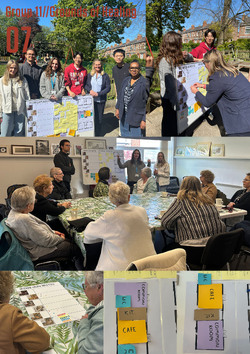
The main group of people we were to ‘survey’ were the Cafe friday club, a group of elderly people who gathered at the same time every week to socialise. We first entered and presented ourselves - explaining who we were and what we had come to do - after which we brought the whiteboard in. Sofia took control at this stage, explaining what each task we had created was about, with some of the rest of us adding to what she was explaining when it was necessary. Starting with the likes/dislikes and improvements suggestions task, the leader of the cafe Friday club started; soon, though, more people were contributing to the discussion, and in no time everyone was chipping in. While some of us listened, others took notes of what was being said. And there was a lot - from how there is no good storage space to how the lights were hideous, and from how they thought it was a shame their art was not on display (the common room is also being used for other things - such as for an art club) to how the ceiling was sagging and had already had to be repaired once recently when some squirrels got inside.
All those present also took turns to take a look at the colour palettes we had chosen and to place a vote using stickers next to their preferred option. Though we soon realised we had printed the colour palettes too small for comfort, Taecho was able to find them on his tablet and present them enlarged for the people to see better. Soon, a definite favourite emerged - the light, colourful colour palette which consisted of some soft greens, yellows and reds. As for room arrangement (the final task), we heard the same thing repeated - the toilets are inconveniently located (and should probably be moved somewhere outside), the kitchen could expand into where the toilets were currently, and the cafe needed reconfiguring and potentially expanding.
After around half an hour to 40 minutes with the cafe friday club we were satisfied we had gathered a fair amount of information and, conscious that they may want some time together to socialise, returned to the cafe, satisfied. We were not done yet, though - next we asked more members of reception for their opinion. One guy working in the cafe repeated what was said earlier - that he wished the kitchen was larger and that the cafe was better laid out - while another lady from reception that we had an especially long chat with was very enthusiastic about making better use of a dead space adjacent to the cafe which was lying empty at the date of visit, overgrown, but definitely with potential. Could that area turn into an outdoor seating area for use during the warmer months? Maybe even a pub garden?
We finished our time there at around 12pm with some final photos in the outside area, where the four of us posed with several members of the CFC and with our board, by now covered in post it notes with likes, dislikes and suggestions for improvements, as well as in stickers by certain colour palettes. The final results were convincing - the soft colourful colour palette, second down on our list, was a clear favourite with several times more votes than the next most popular option. As for suggestions for improvements, some popular ones were improving the lighting, adding better storage, moving the toilets and making better use of the space available (both in the cafe and outdoors). Room layouts mirrored what people had said in the suggestions. We didn’t end up using the furniture cutouts.
We left shortly after, pleased, as Libby headed off home in her car while the rest of us took the tram back to Manchester.
Posted 28 Apr 2026 12:11
11/5/26

SESSION 8: INTENSIVE WEEK: DAY 1

Following the Easter break, the group reconvened for the first intensive week session, beginning the day by catching up on individual progress and discussing how the remaining workload would be organised over the following days. A large part of the morning focused on reviewing previous booklet examples provided by tutors, helping us better understand how the final publication could be structured and presented. Alongside this, we revisited the needs of the client and discussed how the work produced could most effectively support the Counselling and Family Centre moving forward. To ensure our direction aligned with the collaborator’s expectations, we followed up with an email outlining the proposals we intended to develop and confirming whether he was happy for us to proceed.
After receiving positive feedback and confirmation from the client, the rest of the day was dedicated to progressing the redesign of the café and community spaces. As a group, we explored several design iterations, testing different spatial arrangements, circulation routes, and the relocation of the bathroom facilities to improve the overall functionality of the space. Throughout the process, the feedback gathered during the community engagement workshop remained central to the discussion, particularly comments regarding accessibility, storage, flexibility, lighting, and the overall atmosphere of the environment. These conversations helped guide design decisions and ensured the proposals reflected the needs and preferences expressed by the users of the centre.
By the end of the day, the group had established a much clearer direction for the project, with a stronger understanding of how the design would develop over the remainder of the intensive week. The session concluded with a more finalised design approach, a clearer division of tasks, and a structured plan for completing the remaining drawings, visuals, and publication work.
Posted 26 May 2026 17:15
12/5/26

SESSION 9: INTENSIVE WEEK: DAY 2

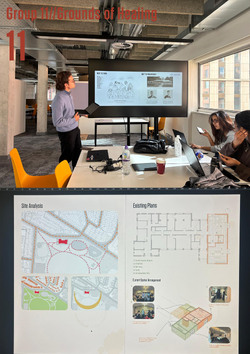
The second day of the intensive week focused primarily on developing accurate existing drawings of the Counselling and Family Centre for the client to use moving forward. A large portion of the day was dedicated to redrawing the existing plans in AutoCAD, a process that required considerable patience and precision due to the limited information available. The only drawings provided were outdated PDF plans, meaning the group had to cross-reference these with the site measurements collected during the initial visit to ensure the plans were as accurate and representative of the space as possible. This process highlighted the importance of measured surveys and careful coordination when working with existing buildings and incomplete documentation.
Alongside the technical drawing work, tasks for the publication were further divided amongst the group, allowing different members to begin developing diagrams, community feedback visuals, and supporting presentation and publication material. At the same time, the redesign of the café and community areas continued to develop through ongoing discussions around layout, circulation, and accessibility. Building on the feedback gathered during the engagement workshop, the group also agreed to design a series of modular furniture proposals that could improve the flexibility of the space while maximising much-needed storage. These ideas aimed to create a more adaptable and efficient environment that could better support the different activities taking place within the centre.
Posted 26 May 2026 17:25
13/5/26

SESSION 10: INTENSIVE WEEK DAY 3

On the third day of the intensive week our ideas began to move from discussion and sketches into a more developed design proposal. After the earlier stages of research, site understanding and community engagement, the focus shifted towards making the project more tangible. The group divided into smaller teams so that different parts of the proposal could progress at the same time.
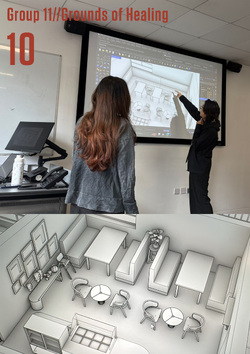
A key task for the day was developing the Rhino model for the proposed building extension and furniture layouts. This helped us test the scale, arrangement and spatial quality of our ideas more clearly. The modelling process allowed the group to understand how the café, activity areas and proposed interventions could work together as one connected space.
Alongside this, some members continued working on plan iterations, while others began preparing visual outputs and organising the publication layout. The café arrangement was discussed in detail, as it was central to the collaborator’s brief and the everyday use of the space. By the end of the day, the group had agreed on a clearer design direction, and the final model became the base for producing renders and visualising the proposal in a more realistic way.
Posted 26 May 2026 17:48
14/5/26

SESSION 11: INTENSIVE WEEK DAY 4

Today was focused on refinement, coordination and completing the final outputs for submission. With the main design direction already decided on Wednesday, the group worked towards bringing everything together into a polished and consistent format.
The team continued to work in parallel. Members responsible for the publication focused on finalising the layout, written content and overall graphic structure, making sure the design journey was communicated clearly. At the same time, others prepared and refined the final presentation for Friday, ensuring that the key ideas, design process and final proposal could be explained confidently.
A major part of the day revolved around completing the publication and presentation before the 9 PM submission deadline. This meant checking the consistency of drawings, renders, text, diagrams and layout, while also making sure the final work reflected the aims of the project and the needs of the collaborator. The focus was not on producing new ideas, but on editing, refining and presenting the work in the strongest possible way.
By the end of Thursday, both the final publication and group presentation had been completed and submitted. The day was intense, but it helped us bring together the collective effort of the group into a clear final output, ready to be presented the next morning at the Geoffrey Manton Building.
Posted 26 May 2026 17:50
15/5/26

SESSION 12: INTENSIVE WEEK DAY 5

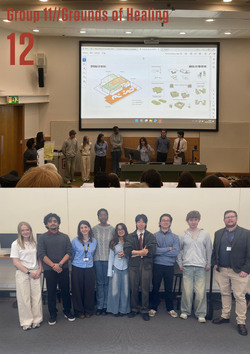
Friday was the day. Our group presentation was scheduled for 10:45 A.M. at the Geoffrey Manton Building, marking the final stage of our MSA Live Action Week. After intensive MSA live sessions of site visits, community engagement, design development, modelling, rendering and publication work, we came together to present the final outcome of Grounds of Healing.
The presentation was delivered by Taecho, Zareen, Nick and Omolade, who explained the project journey from understanding the existing café and community spaces to developing the final proposal. The presentation showed how we responded to the key issues identified during the week, including limited circulation, lack of storage, the need for flexible furniture, and the opportunity to create a warmer and more inclusive environment for the Counselling & Family Centre.
The final proposal brought together the café, community room, outdoor seating, serving counter and modular furniture strategy. Through the floor plan, renders and spatial strategy, we showed how small design interventions could make the space more flexible, welcoming and useful for different users and activities.
One of the most meaningful parts of the day was our conversation with our collaborator, Mark, about the outcomes and proposal. He was happy with the results, which made the work feel valuable beyond just the academic submission. Friday marked the end of our MSA Live journey and reminded us that good design begins with listening, collaboration and responding to real people and places.
Posted 26 May 2026 17:51