Group 22
(RE)WEAVING ACCESS

Macclesfield is a town built on creativity, once the centre of Britain’s silk trade. (Re)Weaving Access are collaborating with the Silk Museum to showcase the diverse history of their town along with their incredible historical collection of looms, textile patterns and costumes. Our aim is to improve the access and circulation of the buildings as well as providing solutions for regenerating the interior environmental conditions. This will improve the comfort of staff and visitors and enhance the air quality to provide the museum with more opportunities to display their unique collection.

Alicia B / Clara C / Fatemeh T / Grian S / Haoran X / Jack K / Natasha W / Sayeh M / Stuti S / Thomas S / Yage C

3/01/2026
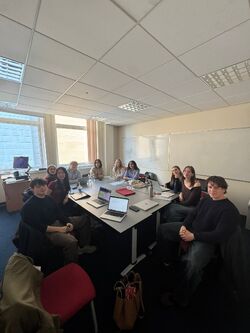
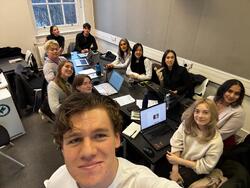
Group 22 met for the first time for an introductory session and a deeply productive debrief of our task for the following weeks. After introducing ourselves and getting acquainted, we put forth the skills we thought we could bring to the group, breaking down the dynamics among BA1, M.Arch1, and MAAR and opening everyone up to the discussion. We exchanged interpretations of the brief, Ideas for the poster, idea on how to run the project, and formulated the questions to ask our collaborator later. We briefly exchanged views on roles and assigned current tasks, including who would design the poster, how it would be done, and what to do during the meeting with the collaborator. Later on in the day, we met with our collaborators from the Silk Museum in Macclesfield. Our discussion was very insightful; all our questions about outputs and the site itself were cleared up, and a date was set to visit the site next week. Our first meeting was definitely a success. We left with a clearer idea of the project, a group chat and drive, and a great group dynamic.
Posted 8 Feb 2026 13:58
17/02/2026
Group 5 met this afternoon for our second check-in meeting. After a quick catch-up and taking some time to admire the progress of our poster team, we discussed our agenda to ensure we covered everything we needed to. We began by delegating responsibility for the timeline, ethics form, and risk assessment to specific team members and clarified the expectations for each task. While planning the timeline, we discussed how our individual schedules aligned and how they fit alongside BA1, MAAR, and MA1 commitments. We also cleared up any confusion surrounding the ethics form and risk assessment to ensure everyone felt confident moving forward. Budget planning was then addressed, and we decided to finalise spending decisions at a later date. However, we agreed that the budget would likely go toward office supplies and that we would enquire about additional funding for transportation, as many of us are excited about visiting the site in person. After discussing logistics and practicalities, we shifted our focus to the main part of the meeting designing our engagement activities. We identified the key groups interacting with the site, particularly school children and general visitors. Our collaborator noted that many museum visitors already know about the space and what to expect, prompting us to carefully consider how to gather meaningful insights. We explored different strategies to collect useful information. Ideas included asking participants to rank exhibition spaces based on accessibility and enjoyment to help us identify layout issues, and having teachers map the paths students take during visits to better understand movement through the space. Reviewing the examples list, we found ourselves drawn to more creative methods, as they tend to avoid predictable or surface-level responses. At the same time, we discussed the limitations of more traditional approaches, such as surveys, and considered ways to make them more effective. To conclude, we agreed on our deliverables for both this week and next, and we set a date for our site visit. Overall, it was a very productive and focused meeting.
Posted 17 Feb 2026 15:20
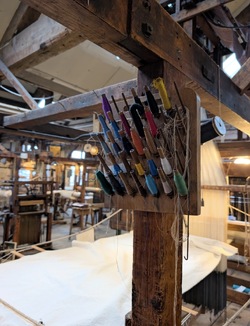
This Monday, Group 5 took the initiative to visit the site in Macclesfield for the first time. After meeting with our collaborator, she guided us on a tour through the museum, walking us through each exhibition space and sharing her perspective on the current challenges the site faces. Seeing the space in person immediately helped us better understand some issues we had previously discussed. One challenge was that the exhibitions felt disconnected from one another in accessibility and theme. The access points between rooms were often unclear, which made navigation confusing and disrupted the overall visitor journey. We also observed that some areas felt cluttered, with displays competing for attention, while others were much more thought-out. The room with the looms and historic flooring, in particular, stood out for its thoughtful layout, demonstrating how impactful the space could be when designed with care. This contrast highlighted the potential for improvement across the rest of the museum. The layout itself was occasionally disorienting. For example, the first exhibition visitors encounter focuses on ancient Egypt, which feels unrelated to the museum’s core theme of silk. This raised questions about how the museum's narrative is introduced and whether the sequence of spaces could be restructured to create a clearer, more cohesive story, for example, by moving the initial access point and the cafe to the other side of the building. During the visit, we documented the space by taking measurements and photographs to support our later analysis and design work. This practical step felt important, as it gave us concrete information to refer back to when developing our design proposal. Overall, the visit was extremely valuable. Experiencing the museum firsthand gave us a much clearer understanding of both its strengths and its problem areas, and it helped ground our ideas for engagement and design in the realities of the space. The trip left us feeling better prepared for the next stage of the project.
Posted 24 Feb 2026 16:11